
In This Article
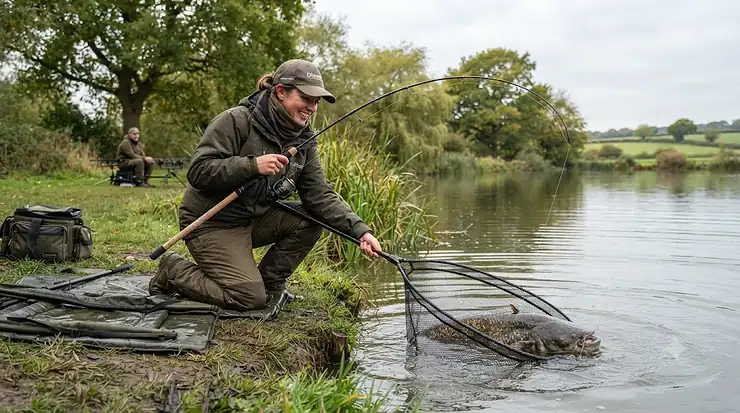
There’s a particular kind of silence that settles over a swim at 2am when you’re waiting on a big wels catfish, and honestly, most of that waiting is far more comfortable when the rod in your hands actually matches the job. Picking the best catfish rod isn’t about grabbing whatever’s cheapest on the shelf, or borrowing your mate’s old carp rod and hoping for the best, it’s about matching blank power, length, and casting weight to the specific water you’re fishing and the size of fish that water actually holds.
In short, a catfish rod is a rod built with a heavier, more parabolic blank than a standard carp or pike rod, designed to absorb the brutal, headshaking runs of a fish that can weigh anywhere from 20lb to well over 100lb in UK waters. Wels catfish are Britain’s largest freshwater fish, and they’re also, worth knowing upfront, a non-native species here, established almost entirely in commercial stillwaters rather than open rivers, a distinction the Environment Agency covers in its own guidance on managing non-native fish risk.
Below you’ll find seven real rods spanning budget bank sticks through to specialist boat blanks, plus practical guidance on river versus stillwater tactics, rod length for boat work, and how catfish habitat in UK waters actually shapes your gear choice. Whether you’re heading to a Midlands day-ticket pit for your first cat or kitting out a proper session on a European river, there’s a sensible pick in here.
Quick Comparison Table
Here’s the fast overview before the detail. Every rod below can genuinely handle catfish, but the length, casting weight, and intended platform (bank versus boat) vary a fair bit, and that’s really the crux of choosing well.
| Product | Type | Length | Best For |
|---|---|---|---|
| NGT XPR Catfish Rod | Bank | 10ft | Budget first cat rod |
| NGT Profiler Catfish Rod | Bank | 10ft | Slightly refined budget pick |
| Free Spirit Tamer ‘S’ Bank Cat Rod | Bank | 11ft | Serious bank specialists |
| Black Cat Black Passion | All-rounder | 2.4m | Continental-style beginners |
| Black Cat Perfect Passion Boat | Boat | 2.5m | Dedicated boat anglers |
| Sonik SK3 Boat Rod | Boat | Short/multi-piece | Budget boat sessions |
| Daiwa Emblem X45 Carp Rod | Crossover | 12ft | Smaller cats & carp duty |
Reading across the table, the split between bank and boat rods is really about length and casting weight rather than raw power. Bank rods like the NGT XPR and Free Spirit Tamer ‘S’ run 10-11ft to punch a baited rig well out into open water, while boat-specific blanks like the Black Cat Perfect Passion Boat and Sonik SK3 are deliberately shorter, since there’s no need to cast far when you’re fishing almost vertically over the side of a boat. If you’re only planning bank sessions on a day-ticket pit, the extra length of a dedicated bank rod earns its keep; if you’re drifting a river from a boat, that same length becomes an awkward liability.
💬 Just one click — help others make better buying decisions too!😊
Top 7 Best Catfish Rods: Expert Analysis
1. NGT XPR Catfish Rod — best budget bank rod for a first cat session
The standout here is genuinely the price-to-performance ratio: this is a proper carbon blank built specifically for catfish, not a relabelled carp rod, and it consistently punches above what its price tag suggests. The NGT XPR Catfish Rod runs 10ft in two pieces with a 200g casting weight, which is comfortably enough to fire a baited rig or a buoyant pop-up rig out across a medium-sized commercial water.
Reviewers consistently note the blank feels notably stiffer than a typical carp rod of similar length, which is exactly the point, since a softer tip would struggle to set a hook in a catfish’s tough, cartilaginous mouth. Paired with a big-pit reel loaded with heavy braid, several anglers report landing fish comfortably into the 80lb-plus bracket without the rod showing any signs of strain.
What most buyers overlook is that a rod this affordable inevitably compromises somewhere, and here it’s cosmetic refinement rather than raw fishing performance, the reel seat and guides are solid rather than premium. For a first catfish rod, or a second and third rod to complete a three-rod session without breaking the budget, that’s an entirely sensible trade-off.
Pros:
- ✅ Genuinely stiff, cat-specific blank at a low price
- ✅ 200g casting weight handles most stillwater rigs
- ✅ Widely available and easy to buy as a matching trio
Cons:
- ❌ Reel seat and guides are basic rather than premium
- ❌ Less refined finish than mid-range alternatives
Prices typically sit in the £25-£35 range per rod, making this the obvious starting point for anyone testing the water with catfishing before committing to pricier gear.
2. NGT Profiler Catfish Rod — slightly refined budget pick
Based on the spec comparison with the XPR above, the NGT Profiler Catfish Rod shares the same sensible 10ft, two-piece, 200g casting weight formula but wraps it in a marginally tidier build, worth knowing if resale value or aesthetics matter to you. The blank material and casting characteristics are broadly similar, so the choice between the two often comes down to which finish you prefer rather than any dramatic performance gap.
Here’s what to weigh: aggregated user feedback specifically praises how the rod looked on a rod pod and how easily it handled a real 24lb catfish during testing, though one angler noted losing a genuinely large fish, which is a useful reminder that even a capable budget rod has limits when a specimen cat decides to properly run.
The spec sheet won’t tell you this, but user reports suggest the Profiler’s guides handle braided mainline without excessive wear better than some budget alternatives, a small but meaningful detail for anyone running 50lb-plus braid regularly.
Pros:
- ✅ Tidier cosmetic finish than the entry-level XPR
- ✅ Confirmed to handle real cats in the 20-30lb range
- ✅ Same practical 200g casting weight as the XPR
Cons:
- ❌ Marginal performance gain for a higher price
- ❌ Still not built for genuinely oversized specimens
Expect a price in the £35-£50 range, which positions it as the sensible upgrade step for anglers who liked the XPR’s blank but wanted a slightly smarter-looking rod.
3. Free Spirit Tamer ‘S’ Bank Cat Rod — best for serious bank specialists
What most buyers overlook about the Free Spirit Tamer ‘S’ Bank Cat Rod is that it wasn’t designed in a vacuum, it was developed and tested against catfish up to 226lb on the Ebro in Spain, which tells you everything about the ambition behind this blank. Available in 10ft, 11ft and 12ft options, with the 11ft pitched as the best all-rounder, this is a rod built for anglers who take bank catfishing seriously rather than casually.
On paper, the specification reads like a proper specialist rod: a Fuji DPS-H22 reel seat, Fuji Alconite guides spaced with multiplier reels specifically in mind, and a distinctive non-lacquered “Perdurable” blank finish that resists the scuffs and scrapes bank fishing inevitably brings. Based on the spec comparison with budget alternatives, the guide spacing alone is a genuinely thoughtful touch, since braid running true against the blank under full battle curve, rather than catching on awkwardly placed rings, matters enormously during a long fight.
Here’s what to weigh before buying: this rod is built and sold through specialist UK tackle retailers rather than being a mass-market Amazon listing, so it’s worth budgeting a little extra time to source it, but for anglers targeting genuinely large specimens from the bank, that specialist pedigree is precisely the point.
Pros:
- ✅ Field-tested against catfish up to 226lb
- ✅ Guide spacing specifically suits multiplier reels
- ✅ Durable “Perdurable” finish resists bank wear and tear
Cons:
- ❌ Premium price reflects the specialist positioning
- ❌ Sourced through specialist retailers, not mass-market stock
Prices generally fall in the £220-£280 range, and for a dedicated big-cat bank specialist, that premium buys genuine field-tested pedigree rather than marketing spin.
4. Black Cat Black Passion — best continental-style all-rounder for beginners
The standout feature of the Black Cat Black Passion is its deliberate positioning as an entry point into “proper” continental catfishing, the buoy-and-leger style widely used across mainland Europe, without the price tag of the brand’s higher-end ranges. At 2.4m in two pieces with a 600g casting weight, the blank can comfortably withstand loads exceeding 20kg, according to the manufacturer’s own testing, while still offering a parabolic action gentle enough to absorb the runs of smaller cats.
Reviewers consistently note the matt black cosmetic finish and twist-free reel holder feel more premium than the price suggests, and the rings are built to work with both multiplier and fixed-spool reels, which matters if you’re not yet committed to one reel style. On paper, this makes it a genuinely flexible first “serious” cat rod for someone stepping up from budget bank sticks.
What the spec sheet won’t tell you, but user reports suggest, is that the 600g casting weight, while high, is really there for stability under load rather than for casting genuinely heavy leads long distances, so don’t expect tournament-style casting range from this particular blank.
Pros:
- ✅ Handles loads over 20kg according to manufacturer testing
- ✅ Twist-free reel holder works with multiple reel types
- ✅ Genuinely budget-friendly entry into continental cat gear
Cons:
- ❌ Not built primarily for long-distance casting
- ❌ Heavier in hand than the UK-style bank rods above
Typical pricing sits in the £70-£90 range, making it a sensible mid-tier pick for anglers wanting a proper continental-style rod without paying specialist prices.
5. Black Cat Perfect Passion Boat — best dedicated boat rod
Unlike every rod above, the Black Cat Perfect Passion Boat is built specifically, and only, for fishing from a boat, and that specialisation shows in every measurement. At just 2.5m with a 100-400g casting weight, it’s noticeably shorter than any bank rod in this list, a deliberate choice since a boat angler is dropping or drifting a bait almost straight down rather than casting it any real distance.
The rod’s powerful parabolic action, built around a 100% IM6 carbon fibre blank, is specifically tuned for drift fishing with heavy baits, exactly the technique used when covering water from a moving boat rather than sitting static on a swim. Based on the spec comparison with bank rods, the shorter length also gives far better leverage and control when a big cat runs directly under the boat, something a longer rod genuinely struggles to manage in a confined space.
Here’s what to weigh: this rod is a poor substitute for bank fishing, its short length makes casting any real distance from a static position awkward, so it’s very much a one-job tool, but for that one job, drift or breaker fishing from a boat, it’s purpose-built rather than a compromise.
Pros:
- ✅ Purpose-built length for genuine boat control
- ✅ Powerful parabolic action suited to drift fishing
- ✅ 100% IM6 carbon blank keeps weight manageable
Cons:
- ❌ Impractical for casting distance from the bank
- ❌ A genuinely specialist, single-purpose rod
Expect a price in the £90-£120 range, reasonable for a dedicated boat blank and a sound investment for anyone regularly fishing rivers or lakes by boat.
6. Sonik SK3 Boat Rod — best budget boat option
Included here as the honest budget boat pick, the Sonik SK3 Boat Rod wasn’t originally designed with catfish specifically in mind, it’s built as a general sea and boat fishing rod, but its shorter length and robust blank make it a genuinely usable stand-in for anglers not ready to invest in a dedicated continental cat-boat rod. Sonik has built a solid reputation in UK tackle for offering first-class specifications at accessible prices, and that ethos carries through here.
On paper, the shorter, sea-rod-style length suits vertical or near-vertical boat presentations reasonably well, similar in principle to the purpose-built Black Cat boat rod above, just without the specific parabolic tuning developed for catfish battles. What most buyers overlook is that a general boat rod like this will cope fine with smaller-to-medium cats in the 20-50lb range, but genuinely large specimens will find its limits faster than a dedicated cat-specific blank would.
Aggregated review sentiment around Sonik’s boat and sea rods generally praises solid build quality for the price point, though as with any dual-purpose rod, it’s worth tempering expectations against a rod engineered from the ground up for catfish specifically.
Pros:
- ✅ Genuinely affordable route into boat-style fishing
- ✅ Solid, robust blank from a trusted UK tackle brand
- ✅ Shorter length suits vertical boat presentations
Cons:
- ❌ Not catfish-specific, so has a lower fish-size ceiling
- ❌ Parabolic action less refined than dedicated cat boat rods
Prices generally fall in the £45-£65 range, making it a sensible stopgap for anglers testing boat catfishing before upgrading to specialist gear.
7. Daiwa Emblem X45 Carp Rod — best crossover pick for smaller cats and carp duty
The Daiwa Emblem X45 Carp Rod earns its place here as the honest crossover option, a genuinely well-regarded carp rod that plenty of UK anglers press into service for smaller catfish on mixed-species stillwaters, rather than a dedicated cat rod pretending otherwise. At 12ft with a 3.5lb test curve, HVF Nanoplus carbon construction, and X45 technology improving twist resistance, it’s built for accurate casting and controlled fighting characteristics rather than brute stopping power.
Based on the spec comparison with the dedicated cat rods above, the Emblem X45’s slimmer blank diameter and more parabolic feel mean it genuinely excels at absorbing the fight of a carp or a smaller catfish under around 40lb, but it starts to feel outgunned against a genuinely large specimen in a way the Free Spirit Tamer or Black Cat rods simply don’t. Reviewers consistently praise the TiForged Air Guides and Fuji DPS reel seat as well above what the price suggests for a carp-focused blank.
What most buyers overlook is that on a mixed water where big cats aren’t the target, or where you’re fishing predominantly for carp with the occasional cat as a bonus, this rod’s finesse and casting accuracy are genuinely more useful day to day than the extra stopping power of a dedicated heavier cat rod.
Pros:
- ✅ Excellent casting accuracy from X45 carbon technology
- ✅ Genuinely capable on carp and smaller cats alike
- ✅ Premium components including TiForged Air Guides
Cons:
- ❌ Outgunned by genuinely large specimen catfish
- ❌ Not a substitute for a dedicated heavy cat blank
Typical pricing lands in the £180-£230 range, positioning it as a smart dual-purpose buy for anglers who split their time between carp and catfish rather than fishing exclusively for cats.
Setting Up for Your First Catfish Session
Getting your first proper catfishing session right starts well before you cast a line. Begin by matching your reel to the rod rather than treating them as separate purchases, since a big-pit fixed-spool or a sturdy multiplier loaded with at least 30lb braid, as widely recommended for UK wels sessions, needs a reel seat and guide spacing genuinely built to handle that load, which is exactly what separates a proper cat rod from a repurposed carp blank.
Next, rig up before you arrive at the water rather than fumbling in the dark. A simple running rig with a strong, wide-gape hook is the standard starting point, since catfish have tough, bony mouths that punish undersized or poorly sharpened hooks. Test your drag setting on dry land first, backing it off slightly looser than you’d use for carp, since a cat’s first run is often far more violent and sustained than anything a similarly sized carp produces.
A common mistake in the first few sessions is underestimating how physical landing a big cat actually is, so set up your unhooking mat and priming your landing net well before you need them, not in a panic mid-fight. Finally, check your venue’s specific rules before you go, since many UK catfish venues, being licensed non-native fish waters, have particular requirements around unhooking, handling, and photography that differ from standard carp fisheries.
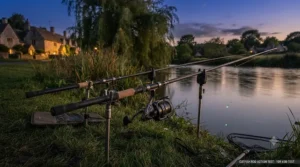
Real-World Scenarios: Matching a Rod to Your Catfishing Trip
If you’re a weekend angler booking a day ticket at a Midlands commercial pit stocked with cats to 40-60lb, a pair of NGT XPR or NGT Profiler rods genuinely covers you, since these venues rarely demand the extreme stopping power of a specialist blank, and keeping your budget sensible for an occasional hobby makes total sense.
If you’re a dedicated specimen hunter chasing genuinely oversized fish on a venue known for 80lb-plus specimens, or planning a trip to a European river where fish regularly exceed 100lb, the Free Spirit Tamer ‘S’ earns its price tag here, built and tested precisely for that scenario. Pairing it with heavy braid and a quality multiplier is the sensible next step once the target fish size genuinely justifies the investment.
If you’re planning a boat-based session, whether drifting a UK reservoir or fishing a continental river from a hire boat, neither of the bank rods above will serve you well, and this is where the Black Cat Perfect Passion Boat or, on a tighter budget, the Sonik SK3 genuinely change the experience, since their shorter length gives you the control a bank rod simply can’t offer from a moving platform. And if you’re a carp angler who occasionally hooks into a bonus cat on a mixed water, there’s a strong argument that upgrading your existing Daiwa Emblem X45 setup rather than buying a dedicated cat rod is the more sensible use of your tackle budget.
Problem → Solution: Common Catfishing Rod Issues
Problem one: your rod feels genuinely overpowered on smaller fish, robbing you of the fight’s enjoyment. This is common when anglers buy a heavy specialist rod for a venue that mostly holds cats under 40lb. The solution is matching test curve to your actual venue rather than the biggest fish theoretically possible, a lighter crossover rod like the Daiwa Emblem X45 often suits day-ticket commercial waters far better than an oversized specialist blank.
Problem two: your rod tip lacks the backbone to set a hook properly in a catfish’s tough mouth. This usually points to using a genuine carp or pike rod rather than a cat-specific blank, since the actions differ meaningfully even at similar test curves. Switching to a purpose-built cat rod like the NGT XPR solves this at minimal cost.
Problem three: casting struggles from a boat, where a long bank rod becomes genuinely unwieldy in a confined space. The fix here is simply using the right tool, a dedicated shorter boat rod like the Black Cat Perfect Passion Boat, rather than persisting with a bank rod that was never designed for that platform.
Problem four: guides wearing prematurely from heavy braided line. Reviewers consistently note that budget rods vary in how well their guides tolerate braid over time, so it’s worth checking guide material specifications, ceramic or Alconite-lined guides, like those on the Free Spirit Tamer ‘S’, genuinely outlast basic guides under heavy braid use.
How to Choose the Best Catfish Rod
Choosing well comes down to matching a handful of practical factors to your actual fishing, not to whichever rod has the most dramatic marketing photography. Here’s the reasoning behind each step.
- Establish your venue’s realistic fish size. A commercial pit stocked to 40lb needs far less rod than a specimen water known for genuine 80lb-plus fish, so research your venue honestly before buying.
- Decide bank or boat first. These two platforms need genuinely different rod lengths, an 11ft bank rod and a 2.5m boat rod solve different problems, and one rarely substitutes well for the other.
- Check the casting weight against your rig. A heavier baited rig or buoy setup needs a rod rated to launch it comfortably, so match casting weight to your actual terminal tackle rather than guessing.
- Consider your reel type. Guide spacing genuinely differs between rods designed for multiplier reels and those designed for fixed-spool, so buy rod and reel as a considered pair rather than as separate afterthoughts.
- Weigh up dedicated versus crossover. If catfish are an occasional bonus rather than your main target, a strong carp rod like the Daiwa Emblem X45 may serve you better than an oversized specialist blank you rarely load to capacity.
- Check guide and reel seat quality. Reviewers consistently flag guide material as the detail that separates budget rods that last from those that wear quickly under heavy braid.
- Factor in where you’ll actually buy it. Some specialist rods, like the Free Spirit Tamer ‘S’, are sold through dedicated tackle retailers rather than mainstream marketplaces, so budget a little extra time to source them properly.
Catfish Rod vs Carp Rod for Big Cats
The core question anglers new to catfishing ask is whether an existing carp rod will genuinely do the job, and the honest answer is: sometimes, but with real limits. A typical carp rod, built around a 3-3.5lb test curve for casting distance and playing a fish that fights largely with weight and short runs, simply isn’t engineered for the sustained, violent power a big wels catfish generates.
| Factor | Dedicated Catfish Rod | Carp Rod |
|---|---|---|
| Typical test curve | 4-6lb equivalent power | 2.5-3.5lb |
| Blank action | Stiffer, more parabolic under load | Softer, more progressive |
| Hook-setting power | Built for tough, bony mouths | Designed for softer carp mouths |
| Best For | Free Spirit Tamer ‘S’, Black Cat rods | Daiwa Emblem X45 on smaller cats |
Interpreting the table, the real difference is backbone under sustained load rather than raw casting ability, a carp rod can absolutely cast a bait just as far as a cat rod, but it can struggle to turn a genuinely large, hard-fighting fish before it reaches snags or structure. Forum discussion among UK cat anglers reflects this split too, some report success using heavier carp or pike rods around 3-3.25lb test curve for cats up to roughly 100lb, provided the line and hooks are upgraded accordingly, while others firmly recommend a dedicated cat blank once fish size becomes genuinely unpredictable. The safest general rule: if your venue holds fish that could realistically exceed 50-60lb, a dedicated cat rod is the sounder investment.
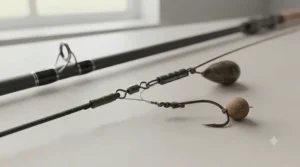
Best Catfish Rod for River Fishing
Worth stating plainly: genuine river catfishing within the UK itself is rare, since wels catfish haven’t established sustainable river populations here, and juvenile sightings in systems like the Trent and Great Ouse remain occasional rather than the norm, a nuance covered in official UK non-native species risk assessment documentation. Most “river fishing” catfish trips by UK anglers actually happen abroad, on continental rivers like the Ebro in Spain or the Rhône in France, where wels are genuinely native or long-established.
For that river-style fishing, whether abroad or on the UK’s slower, canal-like river sections where cats do occasionally turn up, the priority shifts toward a rod that copes with current as well as fish power. A slightly longer, more powerful bank rod, such as the Free Spirit Tamer ‘S’ in its 11ft or 12ft guise, holds a heavier lead steady against flow far better than a shorter boat-style blank, and its Fuji Alconite guides resist the additional line wear that constant current-induced tension can cause.
Here’s what to weigh: river fishing, wherever it happens, usually means longer, more sustained fights as a cat uses the current to its advantage, so prioritising backbone and guide durability over outright casting distance is generally the smarter call for this specific style.
Best Catfish Boat Rod & Rod Length Explained
The single biggest mistake anglers make moving from bank to boat catfishing is bringing a bank-length rod along and assuming it’ll simply work fine. It won’t, not comfortably. Bank rods run 10-12ft because that length helps launch a bait a genuine distance; on a boat, you’re rarely casting more than a few metres, and often simply dropping or drifting a bait almost straight down, so that extra length becomes a liability in a confined cockpit rather than an asset.
Dedicated boat rods like the Black Cat Perfect Passion Boat, at 2.5m, and shorter sea-style rods like the Sonik SK3, are built around this reality. Shorter length gives dramatically better leverage directly over the side of the boat, letting you steer a running fish away from the hull or the propeller far more precisely than a long bank rod ever could in that same space.
What most buyers overlook is that casting weight matters just as much as length here, boat rods are typically rated for heavier casting weights, 100-400g on the Black Cat Perfect Passion Boat, since drift fishing often uses heavier leads to hold bottom in current or depth, a very different requirement from a bank rod optimised for a lighter, longer cast.
River vs Stillwater Tactics: How Your Rod Choice Changes
Stillwater catfishing, by far the more common UK scenario given how established venues actually work, generally rewards a rod built for distance and hold rather than fighting current. On a big commercial pit or purpose-built cat lake, a 10-11ft bank rod with a moderate casting weight, like the NGT XPR or NGT Profiler, comfortably reaches most swims, and fights tend to be defined by the fish’s raw power rather than any assistance from moving water.
River tactics, whether on a continental trip or the UK’s occasional river-adjacent venues, add current into the equation, and current changes everything about how a fish fights. A cat running downstream with the flow behind it generates considerably more sustained pressure than the same fish would in still water, which is precisely why a stiffer, more powerful blank with robust guides, of the kind found on the Free Spirit Tamer ‘S’, tends to suit river work better than a rod optimised purely for stillwater casting distance.
Aggregated angler experience also points to rig differences reinforcing this split: stillwater anglers often favour static leger or buoy rigs cast to a specific spot and left to fish, while river anglers frequently work a bait more actively, drifting or trundling it downstream, a technique that puts additional, repeated strain through the rod’s mid-section rather than concentrating load purely at the tip during a take.
Catfish Habitat in UK Waters
Understanding where catfish actually live in the UK genuinely shapes which rod makes sense for you. Wels catfish are not native to Britain, and current UK regulation reflects that status directly: releasing or moving live catfish between waters without proper authorisation is a legal matter governed by the Prohibition of Keeping or Release of Live Fish Order, which anyone stocking or managing a catfish water needs to navigate carefully.
In practice, this means UK catfish are concentrated in several hundred licensed commercial fisheries, former gravel pits, and specialist day-ticket venues, predominantly across the Midlands, South East, and parts of the West and North of England, rather than being distributed naturally through open river systems the way, say, native barbel or chub are. That habitat concentration is directly why the majority of UK catfishing gear, including several rods in this list, is designed primarily around stillwater bank or boat fishing rather than genuine river conditions.
What most buyers overlook is that this habitat pattern also affects average fish size expectations by venue, a day-ticket pit stocked relatively recently will typically hold smaller average fish than a long-established specialist water that’s had decades to grow specimens to genuinely exceptional sizes, which loops directly back to matching rod power to your specific venue rather than buying for a hypothetical monster everywhere you fish.
Common Mistakes When Buying a Catfish Rod
The single most common mistake is buying based on the biggest theoretical fish rather than the venue you’ll actually fish most often, ending up with an oversized, joyless rod for the modest cats a local commercial pit typically produces. Matching test curve and casting weight to realistic venue expectations, as covered in the earlier choosing guide, solves this before it becomes an expensive regret.
A second frequent error is underestimating guide quality, particularly when running heavy braid regularly. Basic guides on entry-level rods can wear faster under sustained braid friction than ceramic or Alconite-lined alternatives, a detail easy to overlook when comparing rods purely on blank power and price.
A third mistake, especially common among anglers moving from carp fishing, is assuming a carp rod will always suffice, when in reality it depends heavily on genuine venue fish size, as the earlier comparison table makes clear. Finally, plenty of first-time cat anglers buy a single rod rather than a matching pair or trio, only to discover mismatched rods make rotating a multi-rod session, standard practice at most catfish venues, needlessly awkward.
Long-Term Cost & Care of a Catfish Rod
The upfront price of any rod in this list is only part of the real cost of catfishing seriously, and it’s worth factoring in the wider setup before committing. Heavy braid, robust hooks, a suitably sized landing net, and an unhooking mat built for large fish all add up alongside the rod itself, and skimping on any of them undermines even the best blank.
| Product | Blank Investment | Typical Companion Reel Cost |
|---|---|---|
| NGT XPR / Profiler | Low | Budget big-pit reel |
| Black Cat Black Passion | Mid | Mid-range multiplier or big-pit |
| Free Spirit Tamer ‘S’ | High | Quality multiplier recommended |
| Black Cat Perfect Passion Boat / Sonik SK3 | Mid | Boat-specific multiplier |
Looking at this alongside the earlier price ranges, the sensible approach for most anglers is to balance rod and reel spend roughly evenly rather than splashing out on a premium blank paired with a budget reel that can’t handle sustained drag pressure, since the two genuinely need to work as a matched system under load. On the maintenance side, rinsing guides and reel seats after any session near brackish or heavily silted water, and periodically checking guide linings for grooving from braid wear, keeps even a budget rod performing well for several seasons.
✨ Don’t Miss These Exclusive Deals!
🔍 Take your catfishing setup to the next level with these carefully selected rods. Click on any highlighted item to check current pricing and availability. The right blank will help you land those genuinely memorable results every serious cat angler is chasing!
FAQ
❓ What is the best catfish rod for beginners in the UK?
❓ Can I use a carp rod for catfish?
❓ What length rod is best for boat catfishing?
❓ Where do catfish live in UK waters?
❓ Is catfishing legal in the UK?
Conclusion
Picking the best catfish rod really comes down to being honest about two things: what your venue actually holds, and whether you’re fishing from the bank or a boat. A budget NGT XPR or NGT Profiler genuinely covers most day-ticket sessions, while a specialist blank like the Free Spirit Tamer ‘S’ earns its price only once you’re targeting fish that justify that investment. Boat anglers need to think in entirely different terms, where the shorter, purpose-built Black Cat Perfect Passion Boat or budget-friendly Sonik SK3 outperform any bank rod regardless of price.
Crossover anglers shouldn’t feel they need a dedicated cat rod at all costs either, since a well-chosen carp rod like the Daiwa Emblem X45 genuinely handles smaller cats on mixed waters with ease. Whatever you choose, remember that UK catfishing sits within a specific legal and ecological context, wels are non-native, concentrated in licensed stillwaters, and worth respecting accordingly, so pairing the right rod with the right venue knowledge sets up a session that’s both effective and responsible.
Get that match right, and the long, patient wait for a proper take stops feeling like a gamble and starts feeling like a plan.
Recommended for You
- Catfish Rod Under £80: 7 Best Budget Picks for 2026
- Top Catfish Rods Under £150: 7 Proven Picks for 2026
- Zander Lures for Night Fishing: 7 Top UK Picks for 2026
Disclaimer: This article contains affiliate links. As an Amazon Associate, I earn from qualifying purchases. If you purchase products through these links, we may earn a small commission at no additional cost to you.
✨ Found this helpful? Share it with your friends! 💬🤗
