
In This Article
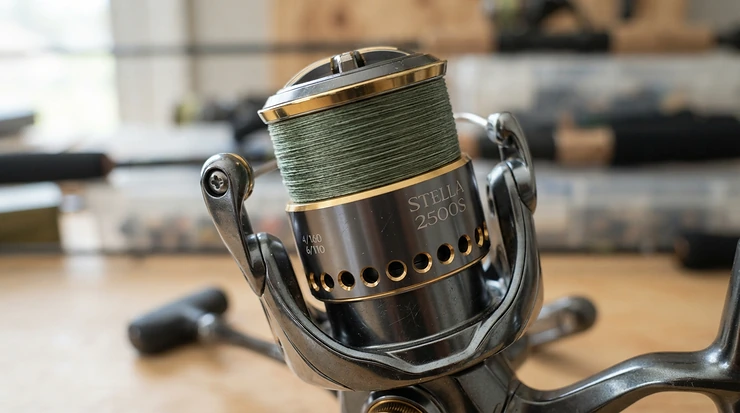
A fixed spool reel for long distance casting is a beach reel whose spool stays still while line peels off the front. It pairs a wide, shallow spool with slow oscillation for tidy line lay and a clamp-down drag, so a lead and bait can be launched as far as your rod, line and technique allow.
Beach fishing has a cruel logic. The fish are often beyond the third gutter, and your cast decides whether your bait gets there or just feeds the gulls. Two reels can look nearly identical on a shelf and behave very differently once the line starts flying. The gap comes down to three things: spool design, line lay and how the reel balances on a 12–14ft rod.
The design itself is very old. Alfred Holden Illingworth’s early-1900s patent, covered in the Canal & River Trust’s history of the fixed spool reel, gave anglers the bail arm that still collects line today. The engineering around it has moved on a long way.
Here’s how this guide works. I haven’t fished these reels myself, so you won’t find invented “when I tested this” stories. Everything below is analysis built from published specifications, UK magazine reviews and aggregated owner feedback, and I flag where verified reviews are thin. If you’re hunting for the best fixed spool beach reel, or the best value beach fishing reel for your budget, the seven picks below cover that ground. It’s also a guide to squeezing more casting distance out of whatever you already own.
Quick Comparison: 7 Reels at a Glance
| Reel | Spool & body | Line-lay system | Price range | Best For |
|---|---|---|---|---|
| Okuma Surf 8k | Graphite body, large capacity | Super Slow Oscillation | Under £100 | Tight budgets |
| Daiwa Crosscast Surf 35 SCW 5000C QD | Compact, 4.9:1 retrieve | Slow Cross Wrap | Around £100 (older RRP) | Easy first distance reel |
| Penn Surfblaster III 8000LCEU | Shallow aluminium spool, spare included | Slow oscillation | £100–£150 | Beginners wanting a spare spool |
| Shimano Speedmaster 14000 XSC | AR-C aluminium spool | Super Slow 5 + Aero Wrap | £100–£170 (stock varies) | Stepping up from entry level |
| Daiwa Windcast BR 5500 LDA | Composite body, two aluminium spools | Cross Spire | £150–£200 (estimate) | Big line capacity |
| Shimano Bullseye 9120 | AR-C spool, 540g | Aero X-Wrap | Mid-£300s to £400 | Premium all-rounder |
| Shimano Power Aero 14000 XSC | Hagane aluminium body, 525g | Parallel body design | £350–£400 bracket | Flagship distance work |
Looking at the table, the Okuma Surf 8k is the value anchor: it spends its budget on line lay, which is where distance is won. The Shimano Bullseye 9120 and Shimano Power Aero 14000 XSC cost roughly three to four times as much, and what that buys is mostly lighter weight and refinement rather than a dramatic jump in casting distance. Mid-range buyers should note that Shimano Speedmaster 14000 XSC stock is patchy, so verify availability first.
💬 Just one click — help others make better buying decisions too!😊
Top 7 Fixed Spool Reels for Long Distance Casting: Expert Analysis
1. Okuma Surf 8k — best value under £100
Its Super Slow Oscillation system lays line in long, shallow crossings, which is why loops stay out of trouble as the spool empties.
It’s a graphite-bodied 8000-size reel with generous line capacity and water-resistance features aimed at life in the wash. Graphite keeps weight reasonable over a long session. On paper, it’s also the trade-off that separates it from metal-bodied rivals. Based on the spec comparison, this suits anglers who want a proper surf spool design without flagship money. Fish it a few times a month over clean ground and the body material is a non-issue. Hammer it weekly over rough ground and you’ll find its ceiling sooner.
On eTackle’s published owner ratings it scores 4.7/5 across 97 reviews, with line lay and casting performance as the praised strengths and graphite durability the recurring question mark.
Pros:
- ✅ Super Slow Oscillation delivers tidy line lay
- ✅ Large line capacity suits surf fishing
- ✅ Water-resistant design copes with wet beaches
Cons:
- ❌ Graphite body is less tough than metal
- ❌ Fewer refinements than premium Shimano rivals
It typically sits in the £80–£100 range at the time of research (check current price), which makes it my strongest candidate for best value beach fishing reel here.
2. Daiwa Crosscast Surf 35 SCW 5000C QD — quick retrieve on a budget
The 4.9:1 gear ratio sits at the quick end of the usual 4:1–5:1 sea-reel band, so slack comes back fast when a fish runs at you.
Daiwa quotes a 15kg maximum drag and about 300 yards of 0.35mm mono. That is a line diameter squarely inside the beach-fishing band, so capacity won’t hold you back. The Slow Cross Wrap oscillation does the line-lay work. In practice, a 5000 size suits lighter beachcasting, estuary work and anglers who dislike hauling a heavyweight reel all day. The reviewer behind Sea Angler’s published test shrugged off the lack of a spare spool, but budget for one if you plan to switch between mono and braid.
I couldn’t verify a large pool of customer reviews for this model. The magazine verdict was glowing, notably on line lay and value, but that test is a few years old, so confirm current stock.
Pros:
- ✅ Fast 4.9:1 retrieve recovers slack quickly
- ✅ Slow Cross Wrap gives dependable line lay
- ✅ 15kg drag is plenty for UK beaches
Cons:
- ❌ No spare spool supplied
- ❌ 5000 size is small for heavy surf
It was around £100 RRP when reviewed; prices may vary, so check current listings. Good value if you can find it.
3. Penn Surfblaster III 8000LCEU — spare spool and slow oscillation
The standout is the bundle: a deeper spare spool holding roughly 500 yards of 30lb braid ships alongside the main spool.
The main spool is a shallow, conical aluminium design married to slow oscillation, which is the right recipe for casting distance. Weight is the catch. Sea Angler’s published review of this reel measured it at over 26 ounces (about 755g), and said the line lay was so clean that casts never needed fussing. What the spec sheet won’t say, but forum owners do, is that the 8000 feels big and noticeably heavier than the 7000. If you’re lighter-framed or fish long sessions, the smaller size may suit you better.
Owner feedback across retailer pages and forums is consistently warm about smoothness and line lay, with the spare spool repeatedly praised as value.
Pros:
- ✅ Spare deeper spool included
- ✅ Slow oscillation gives clean line lay
- ✅ Solid metal-spool build for the money
Cons:
- ❌ At around 755g it’s a heavy reel
- ❌ 8000 size may be oversized for some
Expect roughly £100–£150 (RRP was £149.99 at review; street prices vary). Strong value once the spare spool is counted.
4. Shimano Speedmaster 14000 XSC — step-up AR-C spool
An AR-C cold-forged aluminium spool plus Aero Wrap and Super Slow 5 oscillation brings Shimano’s top-tier line lay down to mid-range money.
The 4.3:1 ratio delivers 103cm of line per handle turn, so recovery is quick for a big reel. It holds about 550m of 0.35mm mono, has a 20kg maximum drag and uses X-Ship gearing. Weight is quoted at roughly 625–650g depending on the source, and bearing counts vary by listing. The Parallel Body is designed to keep line from slapping the rod blank. For anglers upgrading from a basic surf reel, the spec sheet suggests a decent jump in smoothness and spool quality.
Availability needs care: some UK retailers list the model as discontinued and replaced. I couldn’t find a large verified UK owner-review pool, only retailer Q&A confirming it is a big reel.
Pros:
- ✅ AR-C aluminium spool with Aero Wrap
- ✅ 103cm per turn recovers line quickly
- ✅ 20kg drag with X-Ship gearing
Cons:
- ❌ Stock is patchy; some listings discontinued
- ❌ Heavier than the premium Shimano options
It has been listed from under £100 up to the mid-£100s, so check current price. Excellent value if you find a good deal.
5. Daiwa Windcast BR 5500 LDA — big capacity for extreme range
The long-cast spool holds around 490m of 0.35mm line, so you can carry backing, heavier mono or braid without running short.
It retrieves 104cm per turn at 4.6:1, weighs about 680g and has a composite body and rotor. Both spools are aluminium, with Cross Spire line lay and anti-tangle guides on the rotor. The Freespool BR clutch is a carp-first feature that most surf anglers will leave alone. For beach work you clamp the drag down hard, so treat that clutch as a bonus rather than a reason to buy. My analysis is that this is a roomy, long-range reel for anglers who like to over-spool and fish heavier line.
I found only retailer specifications, with no pool of verifiable owner reviews, so treat it as a shortlist candidate rather than a proven performer.
Pros:
- ✅ Huge line capacity with two aluminium spools
- ✅ Cross Spire line lay and anti-tangle guides
- ✅ 104cm retrieve per turn
Cons:
- ❌ Freespool clutch adds little for surf use
- ❌ Few verifiable owner reviews
Listings I found suggest roughly £150–£200 (my estimate from converted retailer pricing), so check current price. Fair value, with caveats.
6. Shimano Bullseye 9120 — premium build with Aero X-Wrap line lay
The AR-C spool and Aero X-Wrap pairing is the reason it keeps showing up near the top of UK reel rankings.
It weighs 540g, runs a slower 3.5:1 ratio and carries a 20kg drag, with Hagane gearing, X-Ship and corrosion-resistant bearings. A slower ratio trades pick-up speed for cranking power, which suits heavy leads in rough surf more than quick-retrieve fishing. eTackle’s review scores it 8.9 overall (build 9.5, cast and retrieve 9.0, drag 9.0, value 8.0), and its published angler rating is 5.0/5, though from only four reviews, so treat that figure lightly. Compared with the 755g Penn Surfblaster III, it saves a meaningful chunk of weight.
Pros:
- ✅ Excellent build quality and corrosion resistance
- ✅ AR-C spool with Aero X-Wrap line lay
- ✅ 20kg drag handles big fish
Cons:
- ❌ Slower 3.5:1 retrieve
- ❌ Premium price, around three times the budget picks
Expect the mid-£300s to around £400 (check current price). Reviewers say the build justifies it, but only buy at this level if you’ll genuinely use that refinement.
7. Shimano Power Aero 14000 XSC — lightest flagship at 525g
An aluminium Hagane body keeps it rigid at just 525g, light for a 14000-size reel.
It has a 4.3:1 ratio (103cm per turn), eight ball bearings, a 20kg drag and about 550m of 0.35mm mono capacity, with Infinity Drive for smoother cranking under load. Hi-Speed Drag lets you switch from free line to fight mode with a small turn of the drag knob. A spare spool is listed, and there’s a slower PGXSC power-gear variant at 3.5:1. In practice, this is the reel for anglers who already cast well and want to remove friction from the equation. A Belgian retailer notes some anglers prefer it to Shimano’s pricier Aero Technium line.
I found no verified owner reviews of the XSC version, so my judgement rests on the spec sheet and brand reputation.
Pros:
- ✅ Rigid aluminium body at only 525g
- ✅ Eight bearings and Infinity Drive for smoothness
- ✅ Spare spool listed with the reel
Cons:
- ❌ Flagship pricing
- ❌ No verified XSC owner reviews found
The Power Aero family sits in roughly the £350–£400 bracket (check current price for the XSC). Hard to justify unless you cast competitively.
How the Seven Compare on Paper
| Reel | Gear ratio | Max drag | Weight | Line capacity (as published) | Best For |
|---|---|---|---|---|---|
| Okuma Surf 8k | Not found | Not found | Not found | “Substantial” | Value seekers |
| Daiwa Crosscast Surf 35 SCW 5000C QD | 4.9:1 | 15kg | Not found | ~300yd of 0.35mm | Light, quick-retrieve fishing |
| Penn Surfblaster III 8000LCEU | Not found | Not found | ~755g | Spare spool: ~500yd 30lb braid | Beginners wanting a spare |
| Shimano Speedmaster 14000 XSC | 4.3:1 | 20kg | ~625–650g | ~550m of 0.35mm | Step-up buyers |
| Daiwa Windcast BR 5500 LDA | 4.6:1 | Not found | ~680g | ~490m of 0.35mm | Heavy-line, big-capacity setups |
| Shimano Bullseye 9120 | 3.5:1 | 20kg | 540g | Not found | Premium all-rounders |
| Shimano Power Aero 14000 XSC | 4.3:1 | 20kg | 525g | ~550m of 0.35mm | Competitive casters |
The spec gaps are themselves informative: manufacturers rarely publish the numbers that matter most for casting distance. What you can read is that the Shimano Power Aero 14000 XSC and Shimano Bullseye 9120 are meaningfully lighter than the Penn Surfblaster III, and the Shimano Speedmaster 14000 XSC sits in the middle. Drag figures of 15–20kg look impressive, but few UK beach fish will ever test them.
How to Choose a Fixed Spool Reel for Long Distance Casting
- Pick the right size. UK beach reels typically run from around 4000 (or 450) up to 7000 (or 800), per Sea Angler’s buying guidance, and big-pit 14000 sizes appear in the Shimano range. Match size to your rod and line rather than chasing the biggest number.
- Check line capacity against your line. For clean beach fishing, 12–15lb mono is the standard choice, so look for roughly 200–300 yards of 15lb or 400–500 yards of 12lb.
- Inspect the spool design. A wide, shallow spool lets line leave with minimal friction; the lip shape matters more than any marketing name.
- Demand slow oscillation. It controls line lay, and good line lay is where casting distance is made or lost.
- Insist on a front drag. You need to clamp the spool down before a cast, and only front-drag reels allow that firmly.
- Weigh the reel against your rod. Heavy reels tire the arm and unbalance lighter blanks; spec the weight honestly.
- Count the extras. A spare spool, a line clip and good UK stock availability are real value.
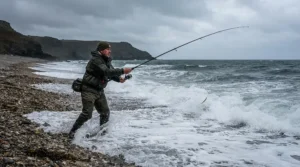
Spool Design: Where Casting Distance Is Really Won
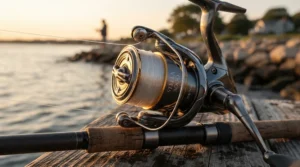
Spool design is the quiet engine of any fixed spool reel for long distance casting. Beach fixed spools typically use a spool around three inches across, and Sea Angler notes that modern long, wide spools hold about 300 yards of line. That size matters because the line leaves the spool in big, gentle loops with less friction than from a narrow spool.
Shallow, wide spools reduce the angle at which line peels off the lip, and that angle is the enemy. As the line level drops inside the spool, friction against the lip rises and casting distance falls. This is why Shimano Bullseye 9120, Shimano Speedmaster 14000 XSC and Shimano Power Aero 14000 XSC all advertise an AR-C cold-forged aluminium spool, while the Penn Surfblaster III uses a conical shallow aluminium spool.
The practical conclusion: choose a spool diameter and depth suited to the line you fish, not simply the largest reel you can afford. A reel that holds 300 yards of 15lb, filled correctly, will out-cast an overweight reel poorly loaded. For most UK beach anglers, light mono plus a shock leader beats thick line straight through, which reduces distance considerably.
Line Lay: The Quiet Hero of Casting Distance
Line lay is how neatly the reel winds line back onto the spool, and it decides how smoothly that line leaves on the next cast. Slow oscillation is the mechanism. The spool moves back and forth slowly during the retrieve, so the line forms long, shallow crossings rather than steep, snag-prone ones. One retailer’s description of the Shimano Speedmaster 14000 XSC says the line goes round roughly 100 times for each spool movement. Every brand here has its own name for the idea: Super Slow Oscillation, Slow Cross Wrap, Cross Spire, Aero X-Wrap.
British Sea Fishing’s guide to fixed spool reels makes a point most reviews skip: fill the spool with line to within a few millimetres of the lip, because each fall in line level adds friction. That is cheap casting distance you can gain without buying anything.
Check your lay after the first session. The profile should look level. Bumps and dips cost casting distance and cause tangles, especially with braid. Use the line clip to stop loops shedding between casts. Honest verdict: line lay matters more than bearing count, a view some UK forum owners share, and it’s why the Okuma Surf 8k punches above its price.
Best Value Beach Fishing Reel: Cost, Maintenance and Long-Term Value
The best value beach fishing reel isn’t the cheapest, it’s the one with the lowest cost per good session. That means weighing purchase price, spare spools and shock leader against how long the reel survives salt, sand and neglect.
| Tier | Reel | Price range | Best For |
|---|---|---|---|
| Budget | Okuma Surf 8k | Under £100 | Value and line lay |
| Budget | Daiwa Crosscast Surf 35 SCW 5000C QD | Around £100 (older RRP) | Light fishing, quick retrieve |
| Mid | Penn Surfblaster III 8000LCEU | £100–£150 | Spare spool included |
| Premium | Shimano Bullseye 9120 | Mid-£300s to £400 | Long-term build quality |
The Okuma Surf 8k wins on pure value per pound, while the Penn Surfblaster III closes the gap once its included spare spool is counted. The premium Shimano Bullseye 9120 only pays back if you fish hard for years, because its advantage is durability and refinement, not a transformation in casting distance.
On maintenance, a quick freshwater rinse and a periodic strip-and-grease keeps any of these alive. Graphite-bodied reels such as the Okuma Surf 8k forgive neglect less than metal ones, but the cost difference leaves room to replace one sooner.
Best Fixed Spool Beach Reel for Your Kind of Fishing
The best fixed spool beach reel depends on who is holding the rod.
Beginners on a budget: the Okuma Surf 8k or Penn Surfblaster III. The first spends on line lay; the second adds a spare spool and forgiving build.
Weekend regulars: the Shimano Speedmaster 14000 XSC, if you can find stock, or the Daiwa Windcast BR 5500 LDA for its capacity, with the honest caveat that verified owner reviews are scarce.
Distance chasers and competitors: Shimano Bullseye 9120 or Shimano Power Aero 14000 XSC. Light weight, premium spool design and smooth gearing help a strong caster waste less energy.
Rough-ground anglers: distance matters less than toughness. eTackle ranks the Daiwa 20 BG MQ (one-piece aluminium Monocoque body, sizes from 2500 to 20000, roughly £170 at lowest listed price) as an all-round fixed spool. It’s not a dedicated distance reel, but it’s a sturdier choice when you’re hauling gear out of snags.
Fixed Spool vs Multiplier for Beach Casting
| Factor | Fixed spool | Multiplier | Best For |
|---|---|---|---|
| Learning curve | Gentle, no thumb control | Steeper, needs practice | Fixed spool for beginners |
| Retrieve speed | Faster; big spool, little diameter loss | Slower in comparison | Fixed spool for quick recovery |
| Casting distance | Excellent with good spool design | Higher ceiling in skilled hands | Multiplier for experts |
| Tangle risk | Loops can shed; line clip helps | Birds’ nests without braking | Fixed spool for forgiveness |
A fixed spool reel for long distance casting wins on forgiveness. Sea Angler notes that fixed spools are faster than multipliers because the spool is bigger and line diameter changes little as it empties. Multipliers repay practice: the Daiwa 7HT Mag, for example, pairs Magnofuge braking with a 5.8:1 ratio and 71cm of line per turn. It’s an outstanding caster, but eTackle cautions it’s a poor choice if you’ve never cast a multiplier.
Based on the comparison, start with a fixed spool. You can add a multiplier later once your casting is consistent.

Features That Actually Matter (And Those That Don’t)
Features that matter: spool design and lip shape, slow oscillation, a front drag you can clamp down hard, a line clip, reasonable weight and a spare spool if you switch between mono and braid. Corrosion resistance is essential, since salt spray quickly ruins unprotected bearings.
Features that matter less than the marketing suggests: bearing counts (owners argue line lay and casting performance beat extra bearings), headline drag figures like 15–20kg (few UK beach fish will test that), and carp-derived freespool clutches such as the Freespool BR system on the Daiwa Windcast BR 5500 LDA, which you’ll lock down for casting anyway.
One more underrated item is gear ratio. A quicker ratio such as the Daiwa Crosscast Surf 35 SCW 5000C QD‘s 4.9:1 recovers slack fast; a slower one such as the Shimano Bullseye 9120‘s 3.5:1 favours heavy cranking. Choose according to your lead weight and tide.
Practical Guide: Setting Up Your Reel for Maximum Casting Distance
Transformation tips Amazon listings don’t give you:
- Choose your line. Go for lighter mono (around 12–15lb) plus a tapered shock leader. Thick line straight through shortens distance.
- Fill the spool correctly. Wind on to within a few millimetres of the lip, then check the lay is level. Use backing if the spool is too deep.
- Clamp the drag. Front-drag reels let you tighten hard before casting; back it off after the lead lands.
- Use the line clip. Clip the line on every cast to stop loops shedding.
- Rinse after every session. A freshwater rinse stops salt crystallising, and a periodic strip-and-grease extends life.
- Common first-30-day mistakes. Overfilling, under-filling, ignoring a bumpy lay and skipping the shock leader are the usual culprits.
If you carry a spare spool (as with the Penn Surfblaster III and Daiwa Windcast BR 5500 LDA), load it with a different line type so you can swap between mono for distance and braid for rough ground.
Real-World Scenarios: Three Anglers, Three Reels
The weekend dad, £100 budget, 12ft rod, clean sandy beach, twice a month. Choose the Okuma Surf 8k. Its line lay does the heavy lifting, and he won’t wear out graphite at that frequency. Pair it with 15lb mono and a shock leader.
The distance-focused caster, 14ft rod, 15lb mono, weekly sessions. The Shimano Bullseye 9120 is the sensible premium pick. If budget is no constraint and he wants a lighter, flagship feel, the Shimano Power Aero 14000 XSC is the stretch option.
The winter night angler, rough ground, heavier line. Capacity and toughness matter more than ultimate casting distance. The Penn Surfblaster III‘s spare deeper spool (about 500 yards of 30lb braid) gives flexibility, and the Daiwa 20 BG MQ is the sturdier all-rounder if distance is secondary.
Safety, Rules and Bass Regulations
Casting hard at a busy beach needs common sense: check behind you before every cast, keep clear of other anglers and walkers, and consult tide times before heading out.
The rules also matter. Bass regulations are updated annually, so confirm them in the MMO’s bass fishing guidance on GOV.UK. For 2026 the guidance and IFCA summaries state that the minimum conservation reference size is 42cm and that recreational anglers (boat or shore) may retain up to three bass per day outside February and March. In February and March, bass fishing is catch-and-release only. Bass nursery area restrictions also apply in certain places and at certain times. The rules for 2027 may change, so check before the new season starts.
FAQ
❓ What size fixed spool reel do I need for beach casting?
❓ Can I use braid on a fixed spool reel for long distance casting?
❓ Is a fixed spool reel better than a multiplier for beginners?
❓ How full should I spool a beach fixed spool reel?
❓ How much should I spend on a best value beach fishing reel?
Conclusion
Choosing a fixed spool reel for long distance casting comes down to a handful of things that spec-sheet headlines rarely emphasise: a shallow, well-made spool design, slow oscillation for clean line lay, sensible weight and a spool filled correctly. Do those four things right and casting distance follows.
If you want the best value beach fishing reel, the Okuma Surf 8k is the clear budget leader, with the Penn Surfblaster III close behind once its spare spool is counted. If you want the best fixed spool beach reel and have the budget, the Shimano Bullseye 9120 is the proven premium choice, and the Shimano Power Aero 14000 XSC is the lighter flagship for dedicated casters. Treat the Shimano Speedmaster 14000 XSC, Daiwa Windcast BR 5500 LDA and Daiwa Crosscast Surf 35 SCW 5000C QD as shortlist candidates, and verify stock and current owner feedback before you commit.
Whatever you buy, load it properly, rinse it after every trip and check the bass rules before you go.
✨ Ready to Add Yards to Your Cast?
🎣 Click any highlighted reel name above to check current pricing and availability, then pick the spool design and line lay that fit your beach, your rod and your budget.
Recommended for You
- Multiplier Reel For Beginners: 7 Best Picks For UK Anglers (2026)
- Beach Fishing Reels: 7 Proven Picks For UK Shores (2026)
- Fixed Spool Vs Multiplier Reel For Beach Casting: 7 Best Picks (2026)
Disclaimer: This article contains affiliate links. As an Amazon Associate, I earn from qualifying purchases. If you purchase products through these links, we may earn a small commission at no additional cost to you.
✨ Found this helpful? Share it with your friends! 💬🤗
