
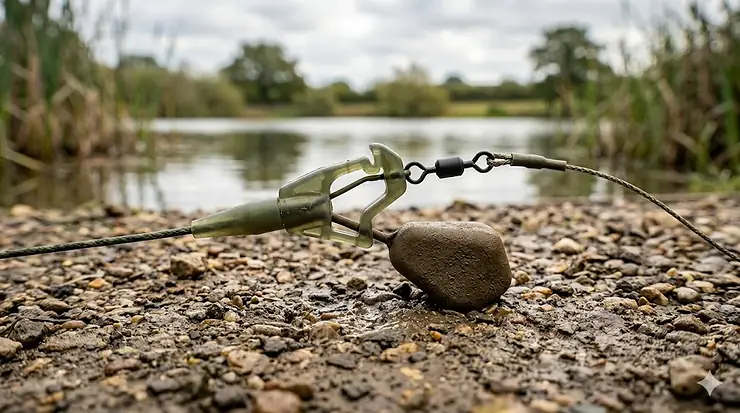
In This Article
Here’s something most anglers learn the hard way: the lead clip you choose affects far more than just your casting distance. It’s the difference between landing that thirty-pounder and watching your rig tangle in the margins, between protecting the fish and risking serious harm if things go sideways in weedy water.
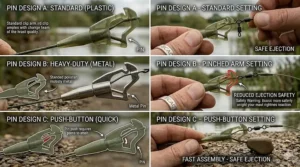
Lead clips for carp fishing have evolved remarkably over the past decade, transforming from basic safety afterthoughts into sophisticated systems that balance three competing demands: secure attachment during the cast, reliable lead ejection when snagged, and fish welfare in every scenario. According to The Angling Trust, Britain’s governing body for recreational angling, fish welfare should be paramount in every aspect of carp fishing—a principle that makes choosing the right lead clip system more than just a tackle decision. The UK market in 2026 offers everything from budget-friendly starter clips at around £4 to premium safe zone systems in the £12-£15 range, each designed for specific conditions you’ll encounter on British waters.
What makes choosing the right system particularly crucial for UK anglers is our climate and venue diversity. You’re not just fishing gravel pits in summer sunshine—you’re dealing with silty canals in February rain, weedy estate lakes in autumn, and pressured day-ticket waters where presentation matters as much as bait choice. Carp have become one of Britain’s most pursued freshwater species precisely because they’re wary, intelligent fish that notice every detail of your terminal tackle. The lead clip that works brilliantly on a clean gravel bottom at Linear might be entirely wrong for a snaggy syndicate water in the Midlands. This guide cuts through the marketing noise to show you exactly which systems excel where, based on real-world performance in British conditions rather than glossy catalogue claims.
Quick Comparison: Top Lead Clip Systems at a Glance
| Product | Type | Price Range | Best For | Key Feature |
|---|---|---|---|---|
| Korda Safe Zone Hybrid Lead Clip | Hybrid leader system | £11-£14 | Pressured waters | Tungsten-weighted leader with 30lb breaking strain |
| Fox Edges Lead Clip | Standard clip | £5-£7 | All-round versatility | Cut-away tail rubber for reliable ejection |
| Nash Speed Lead Clip | Fused one-piece | £6-£8 | Beginner-friendly setup | Cannot separate from swivel, fool-proof safety |
| ESP Adjustable Lead Clip | Variable tension | £7-£9 | Distance casting with PVA | Adjustable arm for custom ejection force |
| Korda Lead Clip Action Pack | Complete kit | £8-£11 | Value starter package | Includes clips, rubbers, and swivels for 5 setups |
| Gardner Tackle Lead Clips | Budget option | £4-£6 | Cost-conscious anglers | Reliable basic system without premium features |
| Trakker Lead Clips | Standard system | £5-£7 | Quick weight changes | Durable construction, efficient design |
💬 Just one click — help others make better buying decisions too! 😊
Top 7 Lead Clips for Carp Fishing: Expert Analysis
1. Korda Safe Zone Hybrid Lead Clip
The flagship of Korda’s lead system range, the Safe Zone Hybrid Lead Clip pairs their proven clip mechanism with a 1-metre translucent leader featuring two tungsten bands strategically placed to pin your end tackle to the lakebed. Available in clear, clay, and silt colourways to match different bottom compositions, this system addresses a problem that standard lead clips simply ignore: the first 30cm of line after your lead is often the section wary carp inspect most closely.
The hybrid design combines a size 8 swivel with a moulded clip body that accepts standard tail rubbers, whilst the fused leader eliminates knot failure points. Breaking strain sits at a reassuring 30lb—more than adequate for UK carp fishing where you’re rarely targeting fish that would test that limit. In practice, the tungsten collars make a noticeable difference when fishing over silt or weed, keeping your rig presentation flat rather than allowing it to rise and wave about like a warning flag.
What UK reviewers consistently praise is how the system performs in our notoriously weedy estate lakes and gravel pits. The translucent leader genuinely disappears against most lake beds, and the tungsten bands prevent that tell-tale line lift that spooks fish in shallow margins. Worth noting: in the damp British climate, the leader material shows impressive abrasion resistance even after multiple sessions of being dragged through marginal reeds.
Pros:
✅ Tungsten bands genuinely improve presentation on silt and weed
✅ 30lb breaking strain handles powerful British carp confidently
✅ Translucent leader blends into most UK lake bed types
Cons:
❌ Premium pricing compared to basic clip systems
❌ 1-metre leader can be excessive for short-range fishing
Price range: Around £11-£14. Best suited for anglers fishing pressured syndicates or day tickets where every presentation edge matters, particularly on venues where fish have seen it all before.
2. Fox Edges Lead Clip
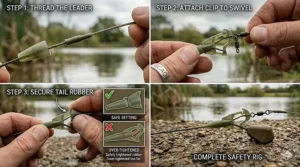
Fox International’s Edges Lead Clip represents what happens when a major tackle manufacturer focuses on getting the fundamentals absolutely right rather than chasing innovation for its own sake. This is a straightforward, reliable clip system that does exactly what most UK carp anglers need: holds the lead securely during casting, releases it when required, and doesn’t cost half your tackle budget.
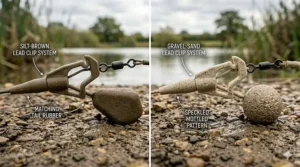
The design features a size 8 swivel and a moulded clip body with a cut-away section in the tail rubber—this detail matters more than it might sound. When the lead snags or a powerful fish applies ejection force, that cut-away ensures clean, predictable release rather than the lead hanging up or the rubber splitting unpredictably. Fox supplies the clips with colour-matched tail rubbers in weedy green, gravel brown, and silt shades, allowing you to maintain camouflage across your entire end tackle.
In real-world British fishing, the Fox Edges clip excels at being utterly dependable without demanding any special setup knowledge. You can fish it with heavy 4oz leads for distance work on larger pits, or scale down to 2oz for delicate margin presentations on smaller day ticket venues. UK anglers fishing commercial waters particularly value how the system handles repeated casts and lead changes without the components wearing or weakening—important when you’re clocking up 30+ casts in a weekend session.
Pros:
✅ Cut-away tail rubber ensures reliable, predictable lead ejection
✅ Colour-matched components maintain camouflage throughout rig
✅ Robust construction withstands heavy use on commercial circuits
Cons:
❌ Standard design lacks advanced features of premium systems
❌ Tail rubbers can split after extended use in very snaggy conditions
Price range: £5-£7 for a pack. Ideal for the all-round UK carp angler who fishes a variety of venues from canals to gravel pits, where solid reliability matters more than specialised features.
3. Nash Speed Lead Clip
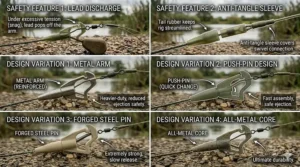
The Nash Speed Lead Clip addresses the single most common lead clip failure mode: the clip body separating from the swivel under stress, leaving you with a dangerous fixed lead setup. Nash’s solution is elegantly simple—they’ve fused the entire assembly into one moulded piece that physically cannot come apart, regardless of how much force a fish or snag applies.
This one-piece construction means the only thing that can eject is the lead itself, exactly as a safety system should function. The integral quick-change swivel allows easy rig replacement without retying knots, whilst the moulded body accepts splicing, looping, or direct knotting for use with leaders, tubing, or naked mainline setups. For anglers new to carp fishing or those who simply want fool-proof safety without thinking about it, this design removes the guesswork entirely.
What makes the Speed Clip particularly relevant for UK waters is its performance in weedy venues. Many British estate lakes and club waters feature heavy weed growth from May through October, creating exactly the scenarios where lead ejection safety becomes critical. The fused design means you can fish confidently knowing the system will behave predictably if a hooked fish dives into weed beds or if you snag on the cast. British reviewers note it handles our damp conditions well, with the moulded components showing no degradation even when stored in less-than-ideal shed or garage environments over winter.
Pros:
✅ Fused one-piece design eliminates clip separation failure risk
✅ Quick-change swivel enables fast rig changes without retying
✅ Fool-proof safety ideal for beginners or quick setup situations
Cons:
❌ Limited adjustability compared to variable-tension systems
❌ One-piece moulding means you cannot replace individual components
Price range: £6-£8. Perfect for UK anglers fishing weedy venues, beginners wanting reliable safety without complexity, or experienced anglers seeking a simple, dependable system that just works.
4. ESP Adjustable Lead Clip
The ESP Adjustable Lead Clip solves a problem that vexes many UK distance anglers: how do you fish heavy leads with large PVA bags at range without the lead ejecting on impact with the water, whilst still maintaining safety for when you need the lead to discharge in snags? ESP’s answer is a clip with an adjustable retaining arm that you can configure for different scenarios.
In its full-length configuration, the arm holds leads securely enough for aggressive casting with PVA bags—genuinely useful when you’re fishing 100-metre-plus casts on larger British gravel pits where bait presentation at distance matters. Cut the arm back progressively, and you reduce the ejection force required, eventually reaching a configuration that releases the lead with minimal resistance for fishing in heavy weed or snags. This versatility means one clip system adapts to different venues rather than requiring you to swap between completely different setups.
The adjustable design particularly suits UK anglers who fish varied venues throughout the season. Perhaps you’re hitting big pits like Linear or Wraysbury in summer, demanding distance work with method or stick mixes, then switching to snaggy syndicate waters in autumn where lead safety becomes paramount. Rather than maintaining separate rig setups, you simply adjust the arm length to match the venue requirements. Each pack includes clips, tail rubbers, and swivel retaining pegs in camouflage colours—weedy green, camo brown, and choddy silt—covering most British lake bed types.
Pros:
✅ Adjustable arm adapts to different venue requirements and fishing styles
✅ Full-length setting prevents premature lead ejection during distance casting
✅ One system serves both PVA bag work and snag fishing applications
Cons:
❌ Requires experimentation to find optimal arm length for each scenario
❌ Trimmed arms cannot be returned to full length—adjustment is permanent
Price range: £7-£9. Best for versatile UK anglers who fish multiple venue types or those specifically targeting distance fishing on large gravel pits where PVA presentation matters.
5. Korda Lead Clip Action Pack
The Korda Lead Clip Action Pack represents exceptional value for UK anglers, bundling everything needed to create five complete lead clip setups in one package. You receive lead clips, tail rubbers in matching camouflage colours, and quality size 8 swivels—no hunting around for components or discovering you’re missing critical parts when setting up at the lake.
Korda’s lead clip design itself is proven and reliable, featuring the security needed for casting whilst maintaining proper safety characteristics for lead ejection when required. The clips work seamlessly with Korda’s inline leads and their extensive range of end tackle, making it straightforward to build compatible systems. What UK anglers particularly appreciate is having spare components readily available—when you snag up and lose a rig on a Saturday afternoon session, you can quickly tie a replacement without making an emergency tackle shop run.
The Action Pack approach makes sense for British carp fishing where most anglers run two or three rods, each requiring its own lead clip setup. Rather than buying individual components separately—often ending up with tail rubbers that don’t quite match your clips or swivels of inconsistent quality—the pack ensures everything coordinates. The camouflage tail rubbers come in colours suited to typical UK lake beds: weedy green for heavily vegetated waters, brown for gravel, and silt for sediment-rich venues.
Pros:
✅ Complete kit provides all components for five setups in one package
✅ Value pricing compared to buying individual components separately
✅ Spare components immediately available when rigging up replacements
Cons:
❌ Standard Korda clips lack advanced features of Safe Zone or hybrid systems
❌ Fixed component selection—no customisation of colours or quantities
Price range: £8-£11 for the complete action pack. Ideal for UK anglers setting up multiple rods, those new to carp fishing wanting a complete starting point, or experienced anglers who value having matched spare components ready.
6. Gardner Tackle Lead Clips
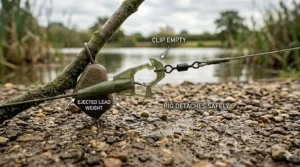
Gardner Tackle Lead Clips occupy the budget-conscious end of the UK market without sacrificing the fundamental safety characteristics that matter. These are straightforward clips that perform the essential functions—secure lead attachment, reliable ejection when needed—at a price point that won’t trouble your wallet. For anglers fishing club waters, local day tickets, or simply wanting dependable terminal tackle without premium pricing, Gardner’s offering hits the mark.
The design uses a standard clip and tail rubber configuration with size 8 swivels, compatible with most lead shapes and sizes UK anglers typically employ. Whilst you don’t get the tungsten-weighted leaders of premium systems or adjustable ejection forces, you do get reliable performance for standard carp fishing applications. British anglers on tight budgets particularly value how Gardner’s pricing allows you to set up multiple rods without significant expense, or to maintain a stock of spare rigs without worrying about the cost of losing tackle to snags.
What Gardner demonstrates is that effective lead clip systems don’t require premium pricing to work properly. On a typical UK club water or commercial fishery where you’re fishing over relatively clean gravel or silt, these clips perform their safety function perfectly adequately. The tail rubbers provide the necessary ejection mechanism, the clips hold leads securely during casting, and the whole system does exactly what most anglers need from their end tackle. In our damp British climate, the components show reasonable durability, though you might find yourself replacing tail rubbers slightly more frequently than with premium alternatives.
Pros:
✅ Budget pricing allows multiple rod setups without significant expense
✅ Reliable basic performance for standard UK fishing scenarios
✅ Compatible with most standard lead shapes and sizes
Cons:
❌ Lacks advanced features like adjustable ejection or weighted leaders
❌ Components may require more frequent replacement than premium options
Price range: £4-£6. Perfect for cost-conscious UK anglers, those setting up starter kits, or experienced anglers who prioritise functional reliability over advanced features and don’t mind replacing components more regularly.
7. Trakker Lead Clips
Trakker Lead Clips deliver dependable performance with a focus on durability and ease of use—characteristics that matter when you’re fishing British waters through four seasons of weather. The moulded clip body features a design that facilitates quick lead changes, useful when you need to adjust weight for different casting distances or when switching between venues with varying bottom compositions.
Trakker’s construction quality suits the demands of UK fishing, where your tackle endures everything from summer heat to winter frost, often stored in less-than-ideal garage or shed conditions between sessions. The clips maintain their integrity through repeated use, whilst the tail rubbers provide consistent ejection force characteristics even after exposure to British weather. For anglers who fish regularly throughout the year, this durability translates to fewer component replacements and more reliable performance across varied conditions.
The system works effectively with Trakker’s broader terminal tackle range, though it’s entirely compatible with leads and end tackle from other manufacturers—important for UK anglers who typically mix components from different brands based on what works best for their specific fishing. British reviewers note the clips perform consistently across different lead weights, from lighter 2oz setups for shallow margin work to heavier 4oz configurations for distance fishing on larger pits.
Pros:
✅ Durable construction withstands varied UK weather and storage conditions
✅ Quick weight change design speeds up rig adjustments at the water
✅ Compatible with terminal tackle from multiple manufacturers
Cons:
❌ Standard feature set lacks specialised capabilities of premium systems
❌ Mid-range pricing without corresponding advanced functionality
Price range: £5-£7. Well-suited for UK anglers wanting reliable, durable clips that handle regular use across different seasons and venue types without requiring premium investment.
Setting Up Your First Lead Clip System: A Practical Guide for UK Waters
Getting your lead clip system properly configured makes the difference between confident casting and constant tangles. Here’s how to set up a reliable system that works across most British carp fishing scenarios, with particular attention to the challenges our climate and venue types present.
Step 1: Choose Your Leader Material or Main Line Setup
For UK fishing, you’ve got three main options. Naked mainline offers simplicity and works brilliantly on clean-bottom commercial fisheries or well-maintained day tickets. Leaders—whether tubing, lead core alternatives, or stiff materials like Korda’s Dark Matter—provide abrasion protection on gravel pits or waters with marginal snags. In weedy venues, leaders also help your end tackle cut through surface weed when playing fish. Most British anglers run 60-90cm leaders, which provides adequate protection without excessive bulk.
Step 2: Thread Components in the Correct Sequence
Thread your tail rubber onto the leader or mainline first, thick end towards the rod. Follow with the lead clip, ensuring the clip mechanism faces away from the rod (towards the lead). The tail rubber needs to slide fully onto the clip body—a snug fit is good, but if you’re struggling to seat it properly, a tiny drop of water helps the rubber slip into position without tearing.
Step 3: Attach Your Swivel
If using a leader system, connect your swivel to the leader end using your preferred knot—many UK anglers favour a simple overhand loop through the swivel eye, which provides 100% knot strength without complexity. For naked mainline setups, tie direct to the swivel using a Palomar or grinner knot. Whatever knot you choose, wet it thoroughly before pulling tight—British tap water works fine, though some anglers prefer saliva as it’s always available waterside.
Step 4: Position the Tail Rubber and Test Ejection
Slide the tail rubber over the back of the clip mechanism, ensuring it covers the retention point completely. The lead should click securely into the clip but still pop out with firm pressure when you pull the lead away from the direction of the swivel. In weedy or snaggy British waters, you want easier ejection—the lead should pop out with moderate pressure. For clean gravel pits where lead retention during casting matters more, you can tolerate slightly firmer retention.
Step 5: British Weather Considerations
Our damp climate affects tail rubbers particularly. After fishing in rain or storing tackle in a garage overnight, tail rubbers can become less pliable, affecting ejection force. Before fishing, it’s worth checking your clip systems and warming the rubber slightly between your hands if needed—particularly relevant during cold British spring and autumn sessions when rubber stiffens noticeably. Keep spare tail rubbers in your tackle box, as they’re the component most likely to need replacement, especially after fishing weedy waters where vegetation can tear or degrade the rubber.
Common Mistakes UK Anglers Make:
The most frequent error is positioning the tail rubber incorrectly, leaving gaps that allow the lead to eject prematurely during casting. Second is using excessively long leaders on small, pressured day ticket waters where a simple 30cm section of tubing would suffice—the longer your leader, the more potential for tangles in marginal weed when landing fish. Third is failing to test ejection force before casting out—spend 30 seconds pulling the lead to check it releases properly, particularly if you’re fishing somewhere snaggy where lead ejection might prevent losing a hooked fish.
Inline vs. Lead Clip Systems: Which Setup Suits Your Fishing?
The choice between inline and lead clip systems fundamentally affects how your rig behaves, both during fishing and in the critical moments when a carp picks up your bait. Understanding the practical differences helps you match the system to your specific UK fishing scenarios rather than just defaulting to whichever setup you first learned.
Inline Systems: Self-Hooking Superiority
Inline lead systems position the lead directly on the mainline or leader, creating a straight pull from rod tip to hook when a carp takes the bait. This configuration generates better self-hooking characteristics because the lead’s weight works in direct alignment with the hook, driving it home as the fish moves away. On pressured British waters where carp have learned to eject suspicious baits quickly, this improved hooking efficiency can make the difference between pricked fish and successful captures.
The disadvantage surfaces in weedy or snaggy conditions. With an inline setup, if the lead becomes trapped, the fish remains tethered with the full weight creating potential harm. Whilst modern inline systems incorporate safety mechanisms—sleeves that slide off leaders, or specially designed inline leads that discharge under pressure—they generally require more thoughtful setup than lead clips to achieve equivalent safety. For British waters with heavy weed growth or snaggy margins, this safety consideration matters significantly.
Lead Clip Systems: Safety-First Approach
Lead clip systems prioritise safety by design, attaching the lead via a mechanism that releases when the lead becomes snagged or when a hooked fish applies sufficient force. This makes them ideal for UK waters where bottom features vary—weed beds, sunken timber, rock bars—creating multiple opportunities for leads to become trapped during the fight. The lead ejects, leaving just the rig and fish connected, substantially reducing the risk of tethering.
The trade-off appears in slightly reduced hooking efficiency compared to inlines, particularly with smaller baits or when targeting suspicious fish on heavily pressured venues. The lead clip creates a small amount of resistance and a less direct pull path compared to inline setups. In practice, on most British waters, this difference is minimal—modern lead clip systems hook fish perfectly effectively—but on extremely pressured syndicates or when fishing ultra-finesse presentations, some anglers prefer inline systems despite their setup complexity.
Matching Systems to UK Venue Types
For clean-bottom commercial fisheries or well-maintained gravel pits with minimal snags, either system works effectively—choose based on personal preference or the specific presentation you’re attempting. When fishing heavily weeded estate lakes, silty meres, or anywhere with significant bottom debris, lead clips offer superior safety without requiring complex inline discharge mechanisms. For pressured day tickets where hook holds on wary fish matter more than snag-free fishing, inline systems provide an edge worth considering, provided you’re confident in your safety setup.
Many experienced British anglers maintain both system types, selecting based on venue and situation. It’s not about one being universally better—it’s about matching terminal tackle to the specific challenges each water presents.
Understanding UK Lead Weight Regulations and Compliance
British freshwater fishing operates under specific regulations regarding lead weights, governed by Environment Agency rules that aim to protect wildlife whilst permitting traditional angling practices. Understanding these regulations ensures you fish legally whilst making informed choices about your terminal tackle.
The Legal Framework
Under UK freshwater rod fishing rules, certain lead weights are prohibited due to environmental concerns—specifically the risk of waterfowl ingesting small lead shot and suffering poisoning. The Environment Agency’s freshwater fishing regulations provide comprehensive guidance on what’s permitted and what’s restricted. The regulations permit lead weights if they weigh 0.06 grams or less, or heavier than 28.35 grams (1 ounce). For carp fishing, this means your leads are entirely legal, as typical carp leads range from 2oz to 5oz—well above the restricted zone.
The restriction primarily affects smaller split shot used in float fishing and some specialist light tackle applications. As a carp angler using leads from 56 grams (2oz) upwards, you’re comfortably within permitted weights. However, it’s worth understanding the regulation exists, particularly if you also fish other disciplines or advise newcomers to the sport.
Lead vs. Alternative Materials
Recent years have seen growing discussion about alternative lead materials, driven by broader environmental considerations beyond the specific regulations. Some British fisheries now encourage or require non-toxic alternatives like tungsten or bismuth-based weights, though these remain exceptions rather than standard practice on most UK waters.
For carp fishing specifically, tungsten putty and tungsten-impregnated leaders have become popular not primarily for environmental reasons, but for presentation advantages—tungsten’s higher density pins rigs more effectively to the lake bed. The various tungsten beads and rig putty components you’ll find in UK tackle shops complement lead systems rather than replacing them entirely.
Practical Compliance for UK Anglers
When fishing anywhere in England, Wales, or the Border Esk region of Scotland, you must hold a valid rod licence from the Environment Agency. You can purchase these online via Gov.uk or at Post Offices. The licence covers legal compliance for your fishing generally, whilst specific venues may impose additional rules about lead usage or other tackle restrictions. Always check fishery rules before fishing—some British waters prohibit lead core leaders or have specific requirements about safety systems, entirely separate from national regulations.
The practical reality for most UK carp anglers is straightforward: use standard carp leads (2-5oz range), ensure your lead clip or inline system incorporates proper safety mechanisms for lead ejection in snags, and check individual fishery rules for any specific restrictions. This approach keeps you compliant with both national regulations and venue-specific requirements whilst focusing your attention on actually catching fish rather than worrying about tackle legality.
Lead Clips vs. Traditional Fixed Lead Rigs: Safety and Performance
The fundamental split in carp end tackle philosophy comes down to whether the lead can discharge from the rig or remains permanently attached. Each approach creates different performance characteristics and safety profiles that matter significantly for British carp fishing.
Fixed Lead Rigs: Historical Context
Traditional fixed lead rigs attach the lead permanently to the rig, either via a knotted swivel or similar non-releasing connection. Historically, these setups dominated carp fishing because they were simple, reliable, and created excellent self-hooking characteristics. The lead’s weight provided direct resistance against which the hook could find purchase, improving hook holds particularly with older hook patterns and less sophisticated bait presentations.
The safety concern emerges when fishing venues with weed, snags, or other bottom features where the lead can become trapped. A fish tethered by a fixed lead faces genuine danger if it cannot free itself, creating welfare issues that the modern British carp fishing community takes seriously. Whilst fixed leads aren’t prohibited, their use in weedy or snaggy conditions is widely considered poor practice amongst responsible UK anglers.
Lead Clips: Modern Safety Standard
Lead clip systems allow the lead to eject when snagged or when a hooked fish applies sufficient force, addressing the fundamental safety concern of fixed rigs whilst maintaining effective hooking performance. In UK carp fishing, lead clips have become the de facto standard on most waters, particularly commercial fisheries, day tickets, and any venue where bottom features create potential for the lead to become trapped.
The question isn’t really whether to use lead clips versus fixed rigs in 2026—it’s which type of lead clip system best suits your specific fishing. On weedy British estate lakes, snaggy gravel pits, or anywhere with submerged timber or heavy vegetation, lead clips are essential safety equipment. Even on relatively clean venues, the precautionary principle suggests using systems designed to protect fish welfare in unexpected situations.
The Hybrid Solution: Inline Safety Systems
Modern tackle design has somewhat blurred the traditional inline versus lead clip distinction. Systems like Korda’s Inline Safety Kit or various manufacturers’ inline discharge mechanisms attempt to combine inline benefits (superior self-hooking) with lead clip safety characteristics (ability to discharge under pressure). These hybrid approaches suit British anglers who want inline performance without compromising on fish welfare.
The practical recommendation for most UK carp fishing is simple: use lead clips or safety-equipped inline systems as your default, reserving pure fixed leads for the rare, specific circumstances where they might be justified (clean, open-water venues with zero snag risk). This approach aligns with both fish welfare priorities and the expectations of the broader British carp fishing community.
Choosing Lead Clips for Different UK Venue Types
British carp waters vary dramatically in character—from intimate estate lakes to vast gravel pits, from weed-choked meres to pristine clay-bottomed syndicates. Your lead clip system should match the specific challenges each venue type presents rather than using one universal setup everywhere.
Commercial Fisheries and Day Tickets
Most UK commercial fisheries feature relatively clean, well-managed lake beds with moderate weed growth and established fishing spots. For those fishing canals, the Canal & River Trust provides comprehensive guidance on access, permits, and best practices for Britain’s extensive waterway network. These venues suit straightforward lead clip systems like the Fox Edges or Gardner clips, where simplicity and reliability matter more than specialised features. You’re typically fishing moderate casting distances (30-70 metres), using standard lead weights (2-3oz), and benefiting from regular fishery management that keeps bottom features predictable.
The key consideration is presentation cleanliness—on pressured day tickets where fish see countless rigs, your end tackle should blend as invisibly as possible. Colour-matched tail rubbers in silt or gravel shades help, as do inconspicuous swivels and neat rig construction. Many successful British day-ticket anglers keep their lead clip setups deliberately simple, reasoning that complexity adds potential failure points without corresponding benefit on well-managed waters.
Estate Lakes and Weedy Waters
British estate lakes often feature substantial weed growth from May through October, creating beautiful fishing but also genuine lead safety challenges. When a powerful carp crashes through surface weed beds with your rig attached, you need absolute confidence that the lead will eject if it becomes trapped, preventing the fish from becoming tethered.
For these venues, prioritise lead clips with reliable, easy ejection characteristics—the Nash Speed Clip’s fused design works particularly well, as does the ESP Adjustable trimmed back for reduced retention force. Couple your clip with anti-tangle tubing or a leader material that cuts through weed effectively, and ensure your tail rubber isn’t creating excessive retention—it’s better to occasionally lose a lead during casting than risk fish welfare in heavy weed.
Gravel Pits and Distance Waters
Large British gravel pits like Linear, Wraysbury, or Bluebell demand different priorities: casting distance, lead retention during flight, and presentation at range where you cannot easily correct problems. These venues suit systems like the ESP Adjustable (configured for maximum retention) or the Korda Safe Zone with its tungsten-weighted leader that helps anchor your rig despite long-distance placement.
Distance fishing often involves PVA bags or sticks, adding weight and air resistance to your cast. Your lead clip must retain the lead securely through aggressive casting whilst still maintaining safety characteristics for when you hook fish at 100+ metres. The adjustable systems earn their keep here—set them up for secure casting, confident that they’ll still eject if a hooked fish dives into marginal features you cannot see from your swim.
Pressured Syndicate Waters
High-quality syndicate waters typically contain educated carp that scrutinise terminal tackle carefully, having survived multiple captures. Here, the Korda Safe Zone system’s tungsten-weighted leader provides genuine advantage—those tungsten collars pin the leader invisibly to the lake bed in a way standard clips cannot match, reducing the visual signature your rig presents to wary fish.
Presentation subtlety extends beyond just the leader though. Use the smallest practical swivels, match tail rubber colours precisely to bottom type, and ensure every component blends seamlessly. On waters where fish average 20lb-plus and might be caught only once or twice yearly, these presentation details separate successful anglers from those who struggle.
Common Lead Clip Mistakes UK Anglers Make (And How to Avoid Them)
Even experienced British carp anglers sometimes fall into lead clip setup errors that compromise safety, presentation, or hooking efficiency. Recognising these common mistakes helps you avoid them in your own fishing.
Incorrect Tail Rubber Positioning
The most frequent error involves positioning the tail rubber incorrectly on the clip body, either leaving gaps that allow premature lead ejection or seating it so tightly that the lead cannot eject when required. The tail rubber should cover the clip’s retention mechanism completely, creating a smooth profile without gaps, whilst still allowing the lead to pop free under appropriate force.
Test this before every session by pulling the lead away from the swivel direction—it should require firm pressure to eject, but shouldn’t feel like you’re fighting the setup. In British damp conditions, check this again after your tackle has been wet, as moisture can affect rubber pliability and therefore ejection characteristics.
Mismatched Components
Mixing lead clips and tail rubbers from different manufacturers sometimes creates compatibility issues—rubbers that don’t quite fit properly, or clips that don’t work optimally with certain rubber designs. While most UK tackle is reasonably interchangeable, using matched components from the same manufacturer ensures the system works as designed.
This particularly matters with specialist systems like the ESP Adjustable or Korda Safe Zone, where the manufacturer has engineered specific component interactions. Budget mixing might save a few pounds initially but can cost you fish or, worse, fish welfare when the system doesn’t perform under pressure.
Ignoring Seasonal Considerations
British weather affects tackle performance more than many anglers realise. Tail rubbers become stiffer in cold conditions, potentially creating excessive lead retention during winter sessions. Conversely, rubber can degrade faster in summer heat and UV exposure, particularly if you leave rigged-up rods in direct sunlight.
Seasonal tackle checks should include examining tail rubbers for degradation, testing ejection force characteristics, and replacing components that show wear. This simple maintenance prevents failures during critical moments and ensures your safety systems function as intended throughout the year.
Excessive Leader Lengths
Some UK anglers run unnecessarily long leaders—perhaps copying competition anglers or magazine features—without considering whether their specific fishing actually benefits from that length. On small, pressured day ticket waters, a 30cm section of leadcore alternative or tubing often outperforms a metre-long leader, creating less bulk and fewer opportunities for marginal weed tangles when landing fish.
Match leader length to your actual requirements: longer for abrasive gravel pits or waters with significant marginal snags, shorter for relatively clean commercial fisheries or when presentation subtlety outweighs protection needs. Question whether you genuinely need that length rather than defaulting to what everyone else appears to be using.
Neglecting Regular Replacement
Lead clips, tail rubbers, and swivels don’t last forever, particularly under the demands of British carp fishing where your tackle endures diverse weather, repeated casting, and occasional snags. Tail rubbers especially should be replaced regularly—many experienced UK anglers swap them every few sessions, knowing a £0.50 component replacement prevents potential tackle failure at a critical moment.
Inspect your lead clip components before each session, looking for wear, degradation, or damage. Replace anything questionable immediately rather than hoping it survives one more session. Fresh components cost pennies compared to the value of a fish you might lose through tackle failure.
FAQ: Lead Clips for Carp Fishing
❓ Are lead clips safer than inline leads for carp fishing in the UK?
❓ What's the best lead clip system for fishing weedy UK estate lakes?
❓ How often should I replace lead clip tail rubbers when fishing regularly?
❓ Can I use the same lead clip setup for both distance casting and margin fishing?
❓ Do I need a rod licence to use lead clips when carp fishing in England?
Conclusion: Making Your Lead Clip Choice
Choosing the right lead clip system for your UK carp fishing ultimately depends on matching components to your specific venues and angling style rather than seeking a single “best” option. The seven systems reviewed here span budget to premium, basic to sophisticated, covering the realistic needs of British anglers fishing everything from local day tickets to prestigious syndicates.
For most UK carp anglers fishing varied venues throughout the season, a reliable mid-range system like the Fox Edges Lead Clip or Nash Speed Lead Clip provides versatile performance without premium pricing. If you specialise in distance fishing on larger British gravel pits, the ESP Adjustable offers genuine advantages worth its slightly higher cost. For pressured syndicate waters where presentation details matter enormously, the Korda Safe Zone’s tungsten-weighted leader provides an edge that can make the difference between blanking and catching educated carp.
Whatever system you choose, prioritise fish welfare through proper setup and regular component maintenance. British carp fishing’s culture rightly emphasises protecting these magnificent fish, making lead clip safety an ethical requirement as much as a practical one. Test your clips before each session, replace tail rubbers regularly, and ensure your end tackle functions as designed when it matters most—when you’re connected to a powerful carp in challenging conditions.
The lead clip market continues evolving, with manufacturers refining designs based on angler feedback and real-world performance. Stay informed about new developments, but remember that reliable, well-maintained tackle from established systems consistently outperforms the latest innovations poorly set up or neglected. Focus on understanding how your chosen system works, maintaining it properly, and fishing with confidence in its performance.
Recommended for You
- Hinged Stiff Rig Setup: 7 Best UK Options & Expert Setup Guide 2026
- How to Tie D Rigs: 7 UK Products & Expert Guide 2026
- 7 Best Ronnie Rig Setup Products UK 2026
Disclaimer: This article contains affiliate links. As an Amazon Associate, I earn from qualifying purchases. If you purchase products through these links, we may earn a small commission at no additional cost to you.
✨ Found this helpful? Share it with your mates! 💬🤗
