
In This Article
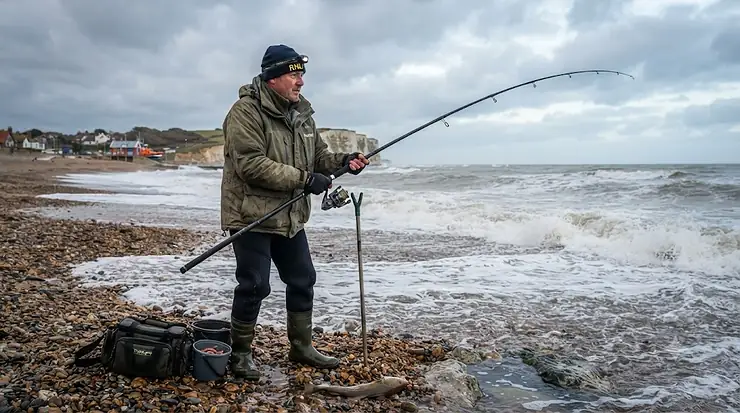
A beachcaster rod for cod fishing is a long, powerful sea rod — typically 12 to 14ft, casting 4-8oz of lead and bait — designed to punch a bait past the breakers and hold bottom in a moving tide while you wait for that unmistakable, slow-motion nod of a feeding cod. Get the wrong one and you’ll know within a single tide: baits blown back onto the sand, a tip that folds like wet cardboard the moment a decent fish leans into it, or arms that ache long before the rod ever does.
Here’s the thing nobody tells you at the tackle shop: the “best” rod isn’t the stiffest, priciest carbon weapon on the wall. It’s the one whose action matches your casting style, your local mark, and — frankly — your budget. A featherweight tournament blank in the wrong hands casts shorter than a forgiving mid-range rod, and a £600 beachcaster gathering dust in the shed helps nobody. Over the next few thousand words we’ll walk through seven genuinely good, currently available beachcasters, unpack what “rod power rating” actually means in practice, look specifically at 13ft beachcasters built for distance casting, and give the budget-conscious angler a proper, honest budget beach caster rod option rather than a token afterthought. No invented reviews, no fabricated hands-on stories — just real specs, honest analysis, and the sort of advice a mate who’s fished the same stretch of coast for years would actually give you.
Quick Comparison Table
| Rod | Length | Casting Weight | Best For | Price Range |
|---|---|---|---|---|
| Century Fireblade Delta | 13ft | 4-8oz | Best overall / serious cod anglers | £400-£550 |
| Zziplex M4 | 13ft 4in | 4-8oz | Tournament power, big cod & conger | £450-£650 |
| Tronixpro Xenon C-6 MX | 13ft 2in | 4-8oz (optimum 6oz) | Distance casting, mixed ground | £160-£220 |
| Shimano Ultegra J Surf Tubular | 13ft | 4-8oz | Casting performance, low wobble | £220-£320 |
| Daiwa Seahunter Z Beachcaster | 13ft-14ft | 4-8oz | First “proper” beachcaster | £150-£220 |
| Penn Tidal Beachcaster | 14ft | 4-8oz | Budget-mid, sensitive tip | £100-£160 |
| Shakespeare Salt XT Beachcaster | 12ft-13ft | 3.5-7oz | Best budget beach caster rod | £60-£100 |
Look at that spread and a pattern jumps out: casting weight barely moves across seven very different rods (almost everything sits in the 4-8oz window that suits UK cod grounds), but price swings by nearly £600. That gap isn’t really about raw casting distance — it’s about blank consistency, guide quality, and how the rod feels after four hours in a Force 5 onshore wind. The Shakespeare Salt XT Beachcaster and Penn Tidal Beachcaster will still catch you cod off a clean beach; they just won’t feel like an extension of your arm the way the Century Fireblade Delta does.
💬 Just one click — help other riders keep their frames rust-free too!😊
Top 7 Beachcaster Rods for Cod Fishing: Expert Analysis
1. Century Fireblade Delta — best overall beachcaster for serious cod anglers
The Century Fireblade Delta tops nearly every independent UK beachcaster round-up for 2026, and once you handle one you understand why. Century build their rods in-house in the UK, and the Fireblade Delta uses a multi-phase high-tensile composite butt wrapped in 3K carbon twill, paired with what the brand calls a hybrid rapid-recovery tip.
In practice, that “rapid recovery” spec means the blank stops oscillating almost instantly after the cast — energy that would otherwise wobble down the line and rob you of distance gets converted straight into flight instead. The forward-sloping Delta anti-tangle guides do exactly what the name suggests during a pendulum cast in a crosswind, which matters more on an exposed east-coast cod mark than most buyers appreciate until they’ve fought a snagged trace at midnight.
This is squarely a rod for the angler who already knows their casting technique and wants a tool that gets out of its own way. Reviewers consistently note the build quality and finishing as class-leading, and the moveable Fuji reel seat means it suits both fixed-spool and multiplier setups without compromise. If you’re still learning pendulum casting, the unforgiving blank speed can actually punish poor timing rather than mask it.
Pros:
- ✅ UK-made with genuinely premium materials throughout
- ✅ Exceptional casting performance across multiple techniques
- ✅ Handles rough ground and clean beaches equally well
Cons:
- ❌ Unforgiving blank speed punishes inconsistent casting timing
- ❌ Premium pricing puts it out of reach for casual anglers
Expect to pay in the £400-£550 range depending on retailer stock, and for anglers who fish three or more times a month, the long-term value stacks up fast against replacing a cheaper rod every season.
2. Zziplex M4 — best for targeting big cod on rough ground
Few names carry the weight the Zziplex M4 does among long-serving UK shore anglers. Built with what devotees simply call “soul,” the M4 pairs a power-house tip section with a genuinely stiff butt, and the brand explicitly positions it for tournament casting and heavy-duty fishing for large species like cod and conger.
What that stiff-butt, powerhouse-tip combination means on the beach is control over big fish in heavy ground — a double-figure cod that buries itself in kelp or rock gully needs a rod with backbone in reserve, not just tip speed. The 13ft 4in length sits right in the sweet spot 13ft beachcaster for distance casting anglers look for, long enough to generate serious leverage without becoming unwieldy on a crowded mark.
Based on the spec comparison with lighter tournament blanks, this isn’t the rod for finesse bite detection on a calm, clean beach — it’s the rod for when the forecast turns nasty and you need something that simply won’t fold. Anglers who fish predominantly rough, mixed ground for winter cod tend to rate Zziplex rods among the most trusted names in that specific niche.
Pros:
- ✅ Genuine tournament-grade casting power and control
- ✅ Stiff butt handles big cod in rough, snaggy ground
- ✅ Cult following built on decades of proven performance
Cons:
- ❌ Less forgiving for beginners still learning technique
- ❌ Premium, near-custom pricing reflects its specialist status
Prices typically land in the £450-£650 range, and this is a rod bought for the long haul rather than a single season.
3. Tronixpro Xenon C-6 MX — best 13ft beachcaster for distance casting
If you only want to own one rod that handles most UK shore-fishing situations, the Tronixpro Xenon C-6 MX is a genuinely strong shout. At 13ft 2in with a 4-8oz casting weight (optimum around 6oz), it’s built specifically for anglers who switch between mixed rough ground and clean sand in the same session.
The slim carbon blank uses a parabolic butt that loads up easily during the cast, which solves the single biggest problem intermediate anglers run into: timing. Stiffer tournament rods reward pinpoint technique but punish anything less; a slightly parabolic action like this one is forgiving enough that you don’t need to be a pendulum-casting specialist to comfortably reach 130-150 yards. Fuji K anti-tangle guides keep the line settled even when the wind picks up off the water.
For anyone specifically hunting for a 13ft beachcaster for distance casting without stepping into four-figure territory, this rod earns its keep on that criterion alone. What most buyers overlook about mid-priced distance rods like this one is that the guide quality — not just blank material — is doing a huge amount of work in keeping cast after cast consistent through a long, cold session.
Pros:
- ✅ Forgiving parabolic butt suits developing casting technique
- ✅ 13ft 2in length genuinely built for distance casting
- ✅ Versatile across rough ground and clean beach marks
Cons:
- ❌ Not as blank-fast as premium tournament-grade rods
- ❌ Optimum 6oz loading means very light rigs feel sluggish
At around £160-£220, it represents some of the best value-per-yard-cast in the current UK market.
4. Shimano Ultegra J Surf Tubular — best for casting performance and low wobble
Shimano doesn’t mess about with the Ultegra J Surf Tubular — it’s a purpose-built casting machine that delivers serious range while keeping weight down and handling tight. The blank design sits among Shimano’s most advanced in the surfcasting category, using their HPC and Nanosheet layering technologies to boost tip speed while cutting lateral wobble.
That reduction in lateral wobble is the detail worth dwelling on: a blank that wobbles side-to-side during the cast bleeds energy sideways instead of forwards, which is precisely why some visually “fast” rods still underperform on the beach. Independent testing rates its build quality at 9.0 and casting performance at 8.5, putting it just a fraction behind the class-leading Century rods on raw scores while typically costing noticeably less.
Based on that spec comparison, this rod suits anglers who’ve already got their pendulum or off-the-ground technique dialled in and want every last yard the blank can legally give them. Reviewers consistently rank it as a very close second to the outright best-overall picks in this category.
Pros:
- ✅ HPC and Nanosheet layering minimises lateral blank wobble
- ✅ Near class-leading casting distance for the money
- ✅ Trusted, widely-serviced brand with strong resale value
Cons:
- ❌ Tubular tip feels less “alive” than solid-tip alternatives
- ❌ Firmer action less forgiving for casting beginners
Typical pricing sits around £220-£320, making it a sensible step-up rod for anglers outgrowing entry-level gear.
5. Daiwa Seahunter Z Beachcaster — best first “proper” beachcaster
The Daiwa Seahunter name has been a fixture in UK shore fishing for years, and the Daiwa Seahunter Z Beachcaster is the brand’s mid-range option pitched squarely at recreational anglers who want genuine Daiwa build quality without stretching to flagship Sandstorm or Tournament pricing.
Its 4-8oz casting weight covers the full spread of UK beach fishing conditions, from calm summer evenings to a lively winter tide race, which is exactly the versatility a first serious beachcaster needs. What the spec sheet won’t tell you, but reviewers note repeatedly, is how approachable the action feels compared with stiffer rods at a similar price — it loads progressively rather than demanding an aggressive, high-speed cast.
This is the rod worth pointing a mate towards if they’re asking what to buy as their first decent beachcaster after outgrowing a supermarket combo. It won’t outcast a tournament blank, but it will teach proper technique without punishing early mistakes, and it holds its value well on the second-hand market when anglers eventually upgrade.
Pros:
- ✅ Genuine Daiwa build quality at accessible pricing
- ✅ Progressive loading action forgives imperfect casting timing
- ✅ Covers the full 4-8oz range UK cod marks need
Cons:
- ❌ Noticeably outcast by premium tournament-grade blanks
- ❌ Standard guides, not the anti-tangle spec of pricier rods
Expect to find it in the £150-£220 range, arguably the sweet spot between “cheap” and “serious” in this entire category.
6. Penn Tidal Beachcaster — best sensitive tip for bite detection on a budget
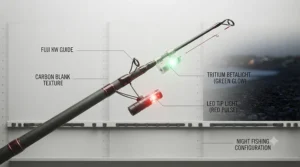
The Penn Tidal Beachcaster is a fantastic mid-range option that offers genuinely useful performance without stepping anywhere near custom-rod pricing. At 14ft with a 4-8oz casting weight, it uses Penn’s Sensitip technology on a tubular tip section, aimed at improving bite detection at range.
Here’s what that means when you’re actually stood on the sand at 2am: a tubular tip with a dedicated sensitive section telegraphs a shy winter cod bite through the rod tip rather than leaving you guessing whether that faint knock was a fish or just tide pressure on the lead. That’s a meaningfully different experience from cheaper solid-tip blanks, which tend to mask subtle bites in exactly the conditions cod fishing demands.
Reviewers and buyers in this bracket consistently flag it as excellent value for money, and it’s a sensible pick for anyone who wants a genuine step up from entry-level kit without yet committing to premium pricing. The 14ft length also gives a slight leverage advantage over 12-13ft budget rods when it comes to holding bottom in a running tide.
Pros:
- ✅ Sensitip tubular tip genuinely improves bite detection
- ✅ 14ft length adds useful leverage in a running tide
- ✅ Strong value-for-money reputation among UK buyers
Cons:
- ❌ Graphite blank less refined than carbon-heavy rivals
- ❌ Guides are functional rather than premium-spec
Typically priced around £100-£160, it’s a genuine contender if you’re weighing it against a true budget beach caster rod but want a little more tip sensitivity.
7. Shakespeare Salt XT Beachcaster — best budget beach caster rod
If your budget is the deciding factor, the Shakespeare Salt XT Beachcaster is a proper bargain, and — crucially — one that won’t fall apart after a couple of trips. It uses a high-grade slim carbon blank with a medium-fast taper, saltwater-proof zirconium oxide guides, and a sliding DPS reel seat that works equally well with fixed-spool or multiplier reels.
The slim carbon blank and medium-fast taper give it a nice, traditional casting feel rather than the harsh, ultra-stiff action some cheap rods default to. Honestly assessed against its price point, it punches well above its weight: zirconium oxide guides are a spec you’d usually expect on rods costing two or three times as much, and they matter because cheap guide inserts groove and fail under abrasive braided line far faster than anglers expect.
As a genuine budget beach caster rod, it’s not chasing extreme tournament distance, and Century-level casters will comfortably out-cast it by 20-30 yards on a good pendulum. But for someone getting into cod fishing who wants to establish whether beachcasting is a lasting hobby before committing serious money, it’s very hard to fault.
Pros:
- ✅ Zirconium oxide guides rarely seen at this price point
- ✅ Traditional medium-fast taper is genuinely pleasant to cast
- ✅ Works with both fixed-spool and multiplier reels
Cons:
- ❌ Won’t match premium rods for extreme distance casting
- ❌ Basic cosmetic finish compared with mid-range alternatives
Usually priced around £60-£100, it remains the most sensible entry point into serious beachcasting most UK anglers will find this year.
Understanding Rod Power Rating: What the Numbers Actually Mean
Every beachcaster carries a rod power rating printed near the handle — typically expressed as a casting weight range in ounces, like “4-8oz” or “5-7oz” — and it’s the single most misunderstood spec in the whole category. This number tells you the range of lead-plus-bait weight the blank is designed to load and cast safely, not a hard limit you can never exceed.
A rod rated 4-8oz will generally perform best somewhere in the middle of that window — often marked as the “optimum” casting weight, as with the Tronixpro Xenon C-6 MX‘s 6oz sweet spot. Load it too light and the blank never fully loads on the cast, costing you distance; load it too heavy and you risk stressing the blank or, worse, snapping it mid-cast in a whip-crack pendulum motion. For UK cod fishing specifically, most anglers settle comfortably into a 5-6oz lead across most tides, which is exactly why 4-8oz has become something close to a national standard rod power rating for beachcasters.
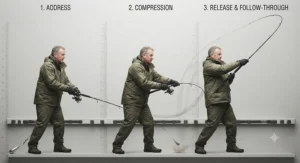
Power rating isn’t the same thing as “stiffness,” either, and that distinction trips up a lot of first-time buyers. A rod can carry a heavy power rating and still have a soft, forgiving action through the middle section — the Daiwa Seahunter Z Beachcaster is a good example of exactly that combination. What actually determines how a rod feels in your hands is the taper: how quickly the blank transitions from a thick, powerful butt to a thinner, faster tip. Fast-taper rods concentrate bend near the tip and suit aggressive, technically precise casting; progressive or parabolic tapers spread the bend further down the blank and suit anglers still building consistent technique. When you’re comparing a rod power rating between two beachcasters, always read it alongside the taper description — the numbers alone only tell half the story.
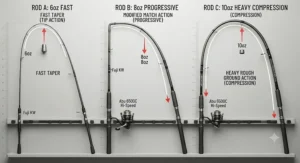
13ft Beachcasters for Distance Casting: Why Length Matters
Length and distance are related, but not quite in the way most beginners assume. A longer rod — 13ft rather than 11ft, say — gives you a longer lever arm during the cast, which translates into higher line speed off the tip for the same physical effort. That’s precisely why the serious distance-casting end of this category, from the Tronixpro Xenon C-6 MX at 13ft 2in through to the Zziplex M4 at 13ft 4in, clusters so tightly around that length.
But a 13ft beachcaster for distance casting only delivers on that promise if the blank’s action matches the length. Simply making a rod longer without stiffening and refining the taper produces something that flexes too much through the mid-section, effectively “wasting” the extra length on wobble rather than converting it into line speed. This is exactly the engineering problem Century’s rapid-recovery tip technology and Shimano’s HPC/Nanosheet layering are solving from two different directions — both aim to stop the blank oscillating after release so the extra leverage of a 13ft length actually reaches the lead.
There’s a practical trade-off worth being honest about, too. A 13ft rod is genuinely more awkward in a crowded car, on a packed pier, or squeezed between other anglers on a popular mark than a 12ft rod is — and the extra length adds a small but real amount of swing weight over a long session. For most UK cod anglers fishing open beaches where distance genuinely matters — pushing a bait past a close sandbar into deeper gully water, for instance — that trade-off is worth making. For anglers fishing tighter marks, estuary mouths, or rock platforms where 100 yards is plenty, a shorter 11-12ft rod often casts just as effectively with none of the hassle.
Budget Beach Caster Rods: What You Get (and Give Up) Under £150
A decent budget beach caster rod and reel combination can genuinely be had for around £200 all-in, and it’s worth being upfront about what that buys you and what it doesn’t. Rods tend to get more sensitive and load more progressively through the cast as you spend more — the difference is real, and it’s genuinely luxurious to fish an £500 rod after years on a £70 one. But “more expensive” and “necessary for catching cod” are not the same claim.
Both the Shakespeare Salt XT Beachcaster and the Penn Tidal Beachcaster demonstrate that a budget beach caster rod doesn’t have to mean a disposable one. The trade-offs at this price point are consistent and predictable: guide inserts are typically a step down from premium zirconium or SiC options (though the Salt XT’s zirconium oxide guides are a notable exception), blank finishing is less refined cosmetically, and — most importantly for casting distance — the taper is usually tuned for forgiveness rather than outright speed. None of that stops a budget rod catching cod. Cod don’t know what your rod cost.
Where a budget beach caster rod genuinely does fall short is at the extremes: hammering out maximum-distance casts in a header wind, or absorbing the shock-load of a big double-figure cod thrashing in close, heavy surf. If your fishing is mostly clean, sheltered beaches within a reasonable casting range, a well-chosen sub-£150 rod will serve you for years. If you’re regularly fishing exposed, rough-ground marks chasing bigger fish at genuine range, that’s when stepping up toward the Daiwa Seahunter Z Beachcaster or Tronixpro Xenon C-6 MX starts to pay for itself in fish landed rather than lost.
How to Choose a Beachcaster Rod for Cod Fishing
Picking the right rod comes down to matching seven practical factors to your actual fishing, not to whatever’s cheapest or flashiest on the shelf that week.
- Match casting weight to your local ground. Most UK cod marks call for a 4-8oz rated rod; heavier mixed or rough ground sometimes pushes toward 5-8oz or beyond.
- Choose length based on your marks, not ego. 12-13ft suits most beaches; step up to a 13ft beachcaster for distance casting only if you’re genuinely fishing open ground where extra yards matter.
- Match the taper to your casting technique. Beginners and developing casters do better with progressive/parabolic actions; confident pendulum casters get more from fast-taper blanks.
- Check guide material and count. Zirconium oxide or SiC-lined guides resist abrasion from braided line far better than basic stainless inserts.
- Decide fixed-spool or multiplier compatibility early. A sliding DPS-style reel seat, like the Shakespeare Salt XT’s, keeps both options open if you haven’t settled on a reel system yet.
- Set an honest budget band first. Decide whether you’re shopping the budget beach caster rod category or the premium tier before you start browsing — it stops “spec creep” talking you into overspending.
- Read the rod power rating alongside the taper description, never in isolation, since the two together — not the number alone — determine how the rod actually feels and casts.
Working through those seven points in order takes most anglers from “overwhelmed by choice” to a shortlist of two or three rods within about ten minutes.
Common Mistakes When Buying a Beachcaster Rod
The single most common mistake is buying purely on maximum casting distance figures quoted in marketing copy, without checking whether that distance was achieved by a tournament caster using technique most weekend anglers simply don’t have. A rod that “casts 180 yards” in a manufacturer’s video might realistically deliver 130 yards in an average angler’s hands — which is still plenty for the vast majority of UK cod marks.
A second frequent error is mismatching reel weight to the rod. Pairing a heavy multiplier with a rod designed around lighter fixed-spool balance throws off the whole casting dynamic, regardless of how good either component is individually. Third, many first-time buyers ignore guide spacing and count entirely, focusing only on blank material — yet poorly spaced guides create friction that can cost real distance no matter how fast the blank itself is. Finally, buyers regularly underestimate how much a rod’s handle length and grip material affect comfort over a four-hour night session; a rod that feels fine in a five-second shop test can become genuinely uncomfortable well before the tide turns.
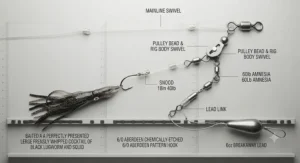
Beachcaster vs Spinning Rods for Cod: Which Wins on a UK Beach?
Spinning and lighter “continental-style” rods have grown genuinely popular for UK sea fishing in recent years, and it’s a fair question whether a dedicated beachcaster is still necessary for cod. The honest answer is: it depends almost entirely on where and how heavy you’re fishing.
Spinning rods, typically rated well under 4oz, excel at close-range, lighter-lead fishing — think estuaries, harbour walls, or calm evenings targeting smaller cod and bass within 40-60 yards. They’re lighter to carry, less fatiguing over a session, and often more sensitive to subtle bites at short range. A proper beachcaster rod for cod fishing earns its keep the moment distance, tide strength, or ground roughness increases. Casting a 5-6oz lead 100-plus yards into a running tide, then holding bottom against that same tide for hours, is precisely the job a beachcaster’s longer length and higher power rating exist to do — a spinning rod would either fail to hold bottom or risk breaking under the strain.
For anglers who fish a genuine mix of marks, owning both isn’t excessive; it’s practical. But if you can only own one rod and your cod fishing regularly means open beaches, moving tides, and casts beyond 80-100 yards, the beachcaster remains the clearly superior tool for the job.
Cod Fishing Regulations & Minimum Sizes: What UK Anglers Need to Know
Before any rod talk matters, it’s worth being clear on the legal side of taking cod home. Under UK minimum conservation reference size rules, cod must measure at least 35cm before they can be retained — anything smaller has to go back immediately, and local Inshore Fisheries and Conservation Authorities can set additional, stricter byelaws in their own waters, so it’s always worth double-checking locally before you fish a new stretch of coast.
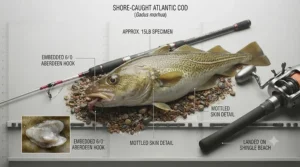
Beyond size limits, cod themselves are a genuinely fascinating target species — the Atlantic cod can live for up to 25 years and grow substantially larger than the fish most shore anglers ever encounter, though UK shore-caught specimens are typically far more modest. Responsible catch-and-release of undersized or surplus fish helps protect breeding stock for future seasons, and it costs nothing beyond a few extra seconds of care unhooking a fish over wet sand rather than dry.
Setting Up Your Beachcaster: The First 30 Days
Getting a new beachcaster set up properly in its first month prevents most of the early problems anglers blame on the rod when the real issue is the setup. Start by matching line diameter carefully to your reel’s line capacity guide — overfilling a multiplier with heavy line is one of the most common causes of frustrating overrun “birds’ nests” in the first few outings.
Spend your first two or three sessions on an open, empty stretch of beach practising your pendulum or off-the-ground cast without worrying about actually fishing, gradually increasing lead weight toward your rod’s optimum rating rather than starting at maximum straight away. Check guide rings for grooving after every session during that first month — new braided line can occasionally reveal a manufacturing flaw in a guide insert that only shows up under real casting stress, and catching it early saves the blank. Finally, rinse the rod in fresh water after every saltwater session, paying particular attention to the reel seat threads, where salt crystals build up fastest and cause the most long-term wear.
Real-World Scenarios: Matching the Rod to the Angler
The weekend beginner, budget around £100, fishing a local clean beach twice a month: the Shakespeare Salt XT Beachcaster is close to ideal here — forgiving enough to learn on, durable enough to survive early mistakes, and cheap enough that outgrowing it in a year or two doesn’t sting.
The committed intermediate angler, budget £150-250, fishing mixed marks weekly and starting to chase real distance: either the Daiwa Seahunter Z Beachcaster or Tronixpro Xenon C-6 MX fits well, with the Tronixpro edging ahead specifically if distance casting on open beaches is the priority.
The serious winter cod specialist, budget £400+, fishing exposed rough ground after dark in genuinely poor weather for double-figure fish: this is where the Zziplex M4 or Century Fireblade Delta justify their price tags — not through marketing, but through blank reliability under real strain that cheaper rods simply aren’t engineered to survive repeatedly.
FAQ
❓ What is the best rod power rating for UK cod fishing?
❓ Is a 13ft beachcaster too long for beginners?
❓ Can a budget beach caster rod really land big cod?
❓ What's the difference between tubular and solid tip beachcasters?
❓ Do I need a multiplier or fixed-spool reel for a beachcaster rod for cod fishing?
Conclusion
There’s no single “best” beachcaster rod for cod fishing — only the best rod for your marks, your budget, and where your casting technique currently sits. The Century Fireblade Delta and Zziplex M4 represent the genuine top tier for anglers who fish hard and often; the Tronixpro Xenon C-6 MX and Shimano Ultegra J Surf Tubular offer a smart middle ground between performance and price; and the Daiwa Seahunter Z Beachcaster, Penn Tidal Beachcaster, and Shakespeare Salt XT Beachcaster prove convincingly that a budget beach caster rod doesn’t have to mean a compromised one.
What matters more than any single spec sheet is matching rod power rating and length to how and where you actually fish — a £550 rod fished poorly loses to a well-matched £80 rod every single time. Take the time to get that match right, and the cod really don’t care what your rod cost.
Recommended for You
- Beachcaster Rod For Rough Ground: 7 Best Picks Tested (2026)
- 12ft Beachcaster For Beginners: 7 Best Picks To Start (2026)
- Best Beachcaster Rods: 7 Top Picks for UK Anglers (2026)
Disclaimer: This article contains affiliate links. As an Amazon Associate, I earn from qualifying purchases. If you purchase products through these links, we may earn a small commission at no additional cost to you.
✨ Found this helpful? Share it with your friends! 💬🤗
